
 KES

Search
- Page Path
- HOME > Search
Original Articles
- Impact of Health Behaviors on Cardiovascular Risk in Thyroid Cancer Survivors according to Metastasis: A Nationwide Cohort Study
- Jeongmin Lee, Jaekyung Lee, Joonseon Park, Kwangsoon Kim, Ja Seong Bae, Kyung-Do Han, Dong-Jun Lim
- Received November 3, 2025 Accepted March 12, 2026 Published online June 17, 2026
- DOI: https://doi.org/10.3803/EnM.2025.2767 [Epub ahead of print]

- 1,158 View
- 62 Download
-
 Abstract
 PDF
 Supplementary Material
 PubReader
 ePub
- Background
Patients with thyroid cancer receive thyroid-stimulating hormone suppressive therapy and radioactive iodine therapy, which can alter metabolism and affect the association between lifestyle factors and cardiovascular disease (CVD) outcomes. However, it remains unclear how changes in lifestyle relate to CVD risk, particularly according to metastatic status. We investigated the impact of baseline and changing lifestyle behaviors on CVD risk among thyroid cancer patients by metastasis status.
Methods
This study was a nationwide cohort study using data from the Korean National Health Insurance Service claims database with the Cancer Clinical Library Database from the Korea Clinical Data Utilization Network for Research Excellence project. Over a mean follow-up of 5.7 years, 99,742 thyroid cancer patients were analyzed.
Results
Current smoking increased CVD risk in both no metastasis (NM) group (hazard ratio [HR], 1.77; 95% confidence interval [CI], 1.33 to 2.35) and the local metastasis (LM) group (HR, 1.30; 95% CI, 1.00 to 1.68), but not in those with distant metastasis. Regular activity reduced the risk in the NM group (HR, 0.84; 95% CI, 0.79 to 0.96). Alcohol consumption was not significantly associated with the CVD risk. Sustained smoking showed an increased CVD risk in both NM (HR, 1.95; 95% CI, 1.31 to 2.90) and LM (HR, 1.88; 95% CI, 1.28 to 2.77). Sustained regular physical activity was associated with a lower risk of CVD only in NM (HR, 0.68; 95% CI, 0.53 to 0.87).
Conclusion
Sustained smoking increased CVD risk, while regular physical activity was associated with a lower risk of CVD, particularly in those without distant metastasis.

- All-Cause Mortality and Secondary Malignancy in Patients with Pheochromocytoma/Paraganglioma
- Hyemi Kwon, Bong-Sung Kim, Kyung-Do Han, Cheol-Young Park
- Received August 26, 2025 Accepted January 2, 2026 Published online May 14, 2026
- DOI: https://doi.org/10.3803/EnM.2025.2628 [Epub ahead of print]

- 1,831 View
- 27 Download
-
Abstract
PDFSupplementary MaterialPubReader ePub
- Background
Pheochromocytomas and paragangliomas (PPGLs) are rare neuroendocrine tumors that can be fatal if not diagnosed early or adequately managed. This study investigated the risk of all-cause mortality and secondary malignancies in patients with PPGL compared to age- and sex-matched controls without PPGL.
Methods
This nationwide population-based cohort study included 1,672 patients with PPGL and 16,790 controls with a median follow-up of approximately 7.1 years. A Cox proportional hazard model was used to estimate the adjusted hazard ratio (HR) and 95% confidence intervals (CI).
Results
The mean age was 46.5 years and 50.5% were male. All-cause mortality was identified in 118 patients with PPGL (7.06%) and 749 controls (4.46%) during the follow-up period. The incidence of all-cause mortality in patients with PPGL was significantly higher than that in controls (9.92 per 1,000 person-years vs. 6.49 per 1,000 person-years, P=0.0003). The risk of all-cause mortality was significantly higher in patients with PPGL than in the controls (HR, 1.372; 95% CI, 1.124 to 1.675). The risk of secondary malignancies was significantly higher in patients with PPGL than in controls (HR, 1.612; 95% CI, 1.33 to 1.954) after adjusting. Among the various cancer subtypes, thyroid and prostate cancers were observed more frequently in PPGL patients, and these findings should be interpreted as descriptive trends.
Conclusion
Patients with PPGL exhibited significantly increased risks of all-cause mortality and secondary malignancies compared with controls, highlighting the importance of appropriate assessment and follow-up.
- Diabetes, obesity and metabolism
Big Data Articles (National Health Insurance Service Database) - A Nomogram for End-Stage Renal Disease Prediction in Patients with Type 2 Diabetes Mellitus: A Nationwide Cohort Study in Korea
- Inha Jung, Bong-Seong Kim, So Young Park, Da Young Lee, Ji Hee Yu, Ji A Seo, Kyung-Do Han, Nan Hee Kim
- Endocrinol Metab. 2026;41(2):245-255. Published online November 12, 2025
- DOI: https://doi.org/10.3803/EnM.2025.2570

- 3,321 View
- 91 Download
-
Abstract
PDFSupplementary MaterialPubReader ePub
- Background
Despite the rising incidence of end-stage renal disease (ESRD) among individuals with type 2 diabetes mellitus (T2DM) in Korea, no predictive model or nomogram has been developed using a nationwide cohort. In this study, we developed a nomogram to predict the long-term risk of ESRD in patients with T2DM using a large-scale, population-based Korean database.
Methods
Using the Korean National Health Insurance Database, patients with T2DM who underwent health examinations between 2015 and 2016 were assigned as development (n=1,744,277) and validation (n=747,407) cohorts. New ESRD cases were identified using codes for renal replacement therapy. A Cox proportional hazards regression model was used to derive a risk-scoring system, and 13 variables were selected. A risk score nomogram was then created to estimate the risk of ESRD.
Results
In the development cohort, 8,631 patients with T2DM developed ESRD during a follow-up period of 4.8±0.9 years. After multivariable adjustment, significant predictors of ESRD included male sex, current smoking, physical inactivity, low income, low body mass index, hypertension, low-density lipoprotein cholesterol ≥160 mg/dL, chronic kidney disease, insulin use, and longer duration of T2DM. A final nomogram incorporating 13 variables was developed to estimate the individual probability of ESRD. The concordance index for ESRD prediction in the validation cohort was 0.906 (95% confidence interval, 0.9 to 0.912).
Conclusion
This 13-variable nomogram provides a simple tool for identifying patients with T2DM at high risk of ESRD and may aid in early intervention.
- Diabetes, obesity and metabolism
Big Data Articles (National Health Insurance Service Database) - Early-Onset Dementia Risk Escalates with Diabetes Duration: Insights from a Nationwide Cohort Study
- Ji-Hong Park, Sun-Joon Moon, Da Yeon Lee, Ji-Hee Ko, Han Na Jang, Hye-Mi Kwon, Se-Eun Park, Kyung-Do Han, Eun-Jung Rhee, Won-Young Lee
- Endocrinol Metab. 2026;41(2):235-244. Published online July 17, 2025
- DOI: https://doi.org/10.3803/EnM.2024.2287

- 4,298 View
- 118 Download
- 1 Crossref
-
Abstract
PDFSupplementary MaterialPubReader ePub
- Background
The prevalence of diabetes mellitus and early-onset dementia (EOD), defined as dementia diagnosed at an age <65 years, is increasing worldwide, with significant socioeconomic implications. We investigated the association between diabetes, prediabetes, and EOD, focusing on the influence of diabetes duration on EOD risk.
Methods
Using the Korean National Health Insurance Service database, we analyzed data from 1,979,509 patients aged 40–60 years who underwent health checkups in 2009. Patients were categorized into five groups: normal, impaired fasting glucose (IFG), newly diagnosed diabetes, diabetes duration <5 years, and diabetes duration ≥5 years. Cox proportional hazard models were used to estimate the adjusted hazard ratios (aHRs) for EOD after adjusting for demographic and clinical covariates.
Results
During the observation period (mean 7.75 years), 8,921 patients with EOD were identified. The diabetes group demonstrated a significantly higher incidence of EOD compared to the normal group (aHR, 1.334; 95% confidence interval [CI], 1.226 to 1.451). EOD risk increased with longer diabetes duration, with the highest risk observed in patients with diabetes ≥5 years (aHR, 1.543; 95% CI, 1.368 to 1.741). No significant difference was observed between the IFG and normal groups (aHR, 0.989; 95% CI, 0.938 to 1.043). Additionally, the hypertension group exhibited a significantly higher incidence of EOD compared to the non-hypertension group (aHR, 1.364; 95% CI, 1.291 to 1.442).
Conclusion
Diabetes is independently associated with increased risk of EOD, and this risk increases with longer diabetes duration. This association remained significant regardless of the presence and duration of hypertension. -
Citations
Citations to this article as recorded by
- Research Progress on Time in Range as a Predictor of Chronic Complications in
Type 2 Diabetes Mellitus
晓雨 李
Advances in Clinical Medicine.2026; 16(05): 2100. CrossRef
- Research Progress on Time in Range as a Predictor of Chronic Complications in
Type 2 Diabetes Mellitus
- Diabetes, obesity and metabolism
Big Data Articles (National Health Insurance Service Database) - Associations of Alcohol Consumption with All-Cause and Cancer Mortalities in Patients with Type 2 Diabetes Mellitus: A Nationwide Population Cohort Study
- Da Yeon Lee, Sun-Joon Moon, Kyung-Do Han, Ji-Hee Ko, Han-na Jang, Hye-Mi Kwon, Se-Eun Park, Eun-Jung Rhee, Won-Young Lee
- Endocrinol Metab. 2025;40(6):893-903. Published online July 14, 2025
- DOI: https://doi.org/10.3803/EnM.2024.2275

- 5,565 View
- 106 Download
- 3 Web of Science
- 3 Crossref
-
Abstract
PDFSupplementary MaterialPubReader ePub
- Background
To investigate the impact of alcohol consumption on all-cause and cancer mortalities in patients with type 2 diabetes (T2D).
Methods
This nationwide cohort study included Korean patients with T2D aged >20 years from a national health exams cohort (2009 to 2012). Participants were categorized based on alcohol consumption: non, mild (<30 g/day), and heavy drinkers (≥30 g/day). Primary outcomes were all-cause and cancer mortality rates. Cox proportional hazard regression analyses were used to calculate adjusted hazard ratios (aHRs) with a 95% confidence interval (CI) with adjustments for age, sex, body mass index, smoking, exercise, comorbidities, diabetes duration, and medications.
Results
Among 2,642,359 participants (median follow-up, 7.8 years), 57.2%, 32.7%, and 10.1% were non, mild, and heavy drinkers, respectively. Compared to non-drinkers, mild alcohol consumption was associated with reduced all-cause mortality (aHR, 0.81; 95% CI, 0.80 to 0.82) and cancer mortality (aHR, 0.88; 95% CI, 0.86 to 0.89), while heavy drinking increased both all-cause (aHR, 1.06; 95% CI, 1.04 to 1.07) and cancer mortalities (aHR, 1.09; 95% CI, 1.06 to 1.11). Subgroup analyses revealed variations: in chronic kidney disease and older age groups, heavy drinkers showed lower risk of all-cause mortality compared to non-drinkers. Regarding cancer mortality, younger and middle-aged groups showed protective effects of alcohol even for heavy drinkers, while females showed linear association between alcohol consumption and cancer mortality.
Conclusion
This study indicates a J-shaped relationship between alcohol consumption and all-cause and cancer mortality risk in patients with T2D, with variations across subgroups. These findings suggest the need for personalized recommendations considering individual risk factors. -
Citations
Citations to this article as recorded by- Alcohol and the endocrine system: A critical review of disruptions, potential mechanisms, and health implications
Patricia E. Molina, Liz Simon
Alcohol, Clinical and Experimental Research.2026;[Epub] CrossRef - Impact of Moderate Wine Consumption on Type 2 Diabetes
Attilio Giacosa, Josep Masip, Ursula Fradera, Ramon Estruch, Mariangela Rondanelli
Nutrients.2026; 18(12): 2006. CrossRef - High BMI-attributable female-specific cancers: a comprehensive analysis of the global disease burden and trends from 1990 to 2021 and projections to 2040
Guangming Sun, Junmei Tang, Hao Chen, Yue Zhu, Pan Ren, Hanyue Gan, Wenbin Wu
Frontiers in Oncology.2025;[Epub] CrossRef
- Alcohol and the endocrine system: A critical review of disruptions, potential mechanisms, and health implications
- Diabetes, obesity and metabolism
Big Data Articles (National Health Insurance Service Database) - The Triglyceride-Glucose Index and Risk of End-Stage Renal Disease across Different Durations of Type 2 Diabetes Mellitus: A Longitudinal Cohort Study
- Mi-sook Kim, Kyu-Na Lee, Jeongmin Lee, Jeongeun Kwak, Seung-Hwan Lee, Hyuk-Sang Kwon, Jing Hughes, Kyung-Do Han, Eun Young Lee
- Endocrinol Metab. 2025;40(5):718-726. Published online May 19, 2025
- DOI: https://doi.org/10.3803/EnM.2024.2271

- 8,954 View
- 124 Download
- 5 Web of Science
- 4 Crossref
-
Abstract
PDFSupplementary MaterialPubReader ePub
- Background
This study investigated the association between the triglyceride-glucose (TyG) index, a marker of insulin resistance, and the risk of end-stage renal disease (ESRD) in individuals with type 2 diabetes mellitus (T2DM), focusing on variations by diabetes duration.
Methods
We analyzed 1,219,148 Korean adults with T2DM from National Health Insurance Service data who underwent biennial health evaluations (2015 to 2016). ESRD was defined using specific procedural codes (V codes), and Cox proportional hazard models were employed to estimate hazard ratios (HRs) for ESRD across TyG index quartiles and diabetes duration categories, adjusting for various confounders.
Results
Over 6,967,381 person-years of follow-up, 7,548 participants developed ESRD. Higher TyG index quartiles were independently associated with increased risk of ESRD, which was more pronounced with longer diabetes duration. The adjusted HR for ESRD in the highest TyG quartile (Q4) compared to the lowest quartile (Q1) was 1.235 (95% confidence interval [CI], 0.995 to 1.533) in new-onset diabetes, and 1.592 (95% CI, 1.465 to 1.730) in those with diabetes for ≥10 years. Compared to the lowest TyG quartile in new-onset diabetes, the adjusted HR for ESRD in the highest quartile with diabetes duration ≥10 years increased to 10.239 (95% CI, 8.440 to 12.422). Subgroup analysis revealed that a higher TyG index consistently increased the risk of ESRD, with stronger associations observed in younger individuals and those without comorbidities.
Conclusion
The TyG index is a significant predictor of ESRD in T2DM, particularly in those with prolonged diabetes duration. Targeting insulin resistance early may mitigate the risk of ESRD in this population. -
Citations
Citations to this article as recorded by- Association between TYG-BMI index and asthma in adults over 45 years of age: analysis of Global Burden of Disease 2021, China Health and Retirement Longitudinal Study, and National Health and Nutrition Examination Survey data
Zhuolin Qin, Longqian Li, Cheng Wang
Journal of Asthma.2026; 63(2): 214. CrossRef - The Association Between the Triglyceride–Glucose Index and the Risk of Diabetic Kidney Disease in Patients with Type 2 Diabetes Mellitus: A Cross-Sectional Study
Munther S. Momani, Raneem Dalaeen, Dia Sarhan, Zaid Sarhan, Suhib Awamleh, Yazan M. Momani, Omar Abu Farsakh
Life.2026; 16(2): 345. CrossRef - Continuous glucose monitoring and risks of acute and chronic diabetes-related complications and mortality in adults with type 1 diabetes: a nationwide cohort study
Ji Yoon Kim, Seohyun Kim, Jae Hyeon Kim
Diabetologia.2026; 69(7): 1858. CrossRef - Longitudinal trajectories of the triglyceride-glucose index and risk of incident type 2 diabetes in adults undergoing repeated health examinations
Nanping Mao, Ruoli Wang, Yi Wang, Lingna Jin, Yanyun He, Wenbin Wu
Frontiers in Endocrinology.2026;[Epub] CrossRef
- Association between TYG-BMI index and asthma in adults over 45 years of age: analysis of Global Burden of Disease 2021, China Health and Retirement Longitudinal Study, and National Health and Nutrition Examination Survey data
- Diabetes, obesity and metabolism
Big Data Articles (National Health Insurance Service Database) - Association between the Triglyceride-Glucose Index and Cardiovascular Risk and Mortality across Different Diabetes Durations: A Nationwide Cohort Study
- Jeongeun Kwak, Kyung-Do Han, Eun Young Lee, Seung-Hwan Lee, Dong-Jun Lim, Hyuk-Sang Kwon, Jeongmin Lee
- Endocrinol Metab. 2025;40(4):548-560. Published online March 5, 2025
- DOI: https://doi.org/10.3803/EnM.2024.2205

- 9,865 View
- 280 Download
- 10 Web of Science
- 11 Crossref
-
Abstract
PDFSupplementary MaterialPubReader ePub
- Background
We aimed to assess the association between triglyceride-glucose (TyG) index and cardiovascular disease (CVD) risk and mortality in a large cohort of diabetes patients.
Methods
A retrospective cohort study of 1,090,485 participants from the Korean National Health Insurance Service database was conducted. Participants were stratified into TyG quartiles.
Results
Higher TyG index quartiles were significantly associated with an increased CVD risk and mortality risk. In fully adjusted models, participants in the highest TyG quartile (Q4) had an 18% higher risk of CVD (hazard ratio [HR], 1.18; 95% confidence interval [CI], 1.13 to 1.23) and a 16% higher risk of mortality (HR, 1.16; 95% CI, 1.11 to 1.23) compared to those in the lowest quartile (Q1). The association was particularly pronounced in patients with fasting glucose ≥126 mg/dL (CVD [HR, 1.33; 95% CI, 1.29 to 1.37], mortality [HR, 1.23; 95% CI, 1.20 to 1.26]; P for interaction <0.001). Patients with a diabetes duration of ≥10 years showed the strongest association between the TyG index and CVD risk (HR, 1.44; 95% CI, 1.38 to 1.50), while the mortality risk was particularly elevated in those with a diabetes duration of less than 5 years (HR, 1.23; 95% CI, 1.18 to 1.30). Subgroup analyses revealed stronger associations between TyG index and CVD risk in younger participants, non-obese individuals, and non-smokers.
Conclusion
The TyG index is a significant predictor of CVD and mortality in diabetic patients, particularly in those with poor glycemic control or longer disease duration. -
Citations
Citations to this article as recorded by- Preoperative triglyceride–glucose index as a metabolic predictor of surgical site infection after posterior lumbar fusion
Yu Hua, Shaoxing Li, Yuan Jiang, Jinwang Liu
Journal of Orthopaedic Surgery.2026;[Epub] CrossRef - Combined effect of triglyceride-glucose index and glucose disposal rate on cardio-cerebrovascular disease
Hongfei Yang, Chao Sun, Ya Li, You Zhou, Rui Wang, Yingxue Li, Marwan Salih Al-Nimer
PLOS One.2026; 21(2): e0342154. CrossRef - The association between insulin resistance indices and the occurrence of major adverse cardiovascular events in patients with premature myocardial infarction: a prospective cohort study
Yu Zhou, Yuhang Wang, Jingxi Chen, Lai Jiang, Ran Chu, Weiwei Tian, Jiaxin Wang, Yin Liu, Jing Gao
Frontiers in Nutrition.2026;[Epub] CrossRef - Current evidence on lipid ratios for cardiovascular risk assessment in diabetes: A review
E. Carretero-Anibarro, D. Orozco-Beltran
Primary Care Diabetes.2026; 20(3): 292. CrossRef - Continuous glucose monitoring and risks of acute and chronic diabetes-related complications and mortality in adults with type 1 diabetes: a nationwide cohort study
Ji Yoon Kim, Seohyun Kim, Jae Hyeon Kim
Diabetologia.2026; 69(7): 1858. CrossRef - Analysis of the prevalence of dyslipidemia in early-onset schizophrenia patients and its correlation with clinical characteristics
Kehuang Li, Zhiwei Liu, Liang Sun, Jingjing Zhang, Xinglong Yin, Zhaokun Zhang, Changjie Cao
Frontiers in Psychiatry.2026;[Epub] CrossRef - Exploring the relationship between triglyceride-glucose index and peripheral neuropathy in Nigerian patients with type 2 diabetes: a comparison with other metabolic markers
Blessing Kenechi Myke-Mbata, Bruno Basil, Izuchukwu Nnachi Mba, Terna Gav Ambrose
International Journal of Research in Medical Sciences.2026; 14(5): 1812. CrossRef - Reassessing of the incremental predictive value of triglyceride-glucose index beyond traditional cardiovascular risk factors: a cohort study based on the China health and nutrition survey and meta-analysis
Fang Liu, Zhipeng Zhao, Haidan Zhao
Frontiers in Cardiovascular Medicine.2026;[Epub] CrossRef - The Triglyceride-Glucose Index: A Practical Tool for Enhanced Cardiovascular Risk Stratification in Type 2 Diabetes
Jang Won Son
Endocrinology and Metabolism.2025; 40(4): 545. CrossRef - The association between triglyceride-glucose index and all-cause/cardiovascular mortality in patients with different glucose metabolism statuses
Jiajun Liu, Jinhua Kang, Pengpeng Liang, Zhangxiao Song, Guiyun Li, Xueshan Jin, Hongyan Wu
Cardiovascular Diabetology.2025;[Epub] CrossRef - Standardized Triglyceride-Glucose and Plasma Atherogenic Indices as Predictors of Diabetic Nephropathy and Coronary Artery Disease in Patients with Type 1 Diabetes Mellitus
Nazif Yalçın, Nizameddin Koca
European Journal of Therapeutics.2025; 32(1): 1. CrossRef
- Preoperative triglyceride–glucose index as a metabolic predictor of surgical site infection after posterior lumbar fusion
Brief Report
- Diabetes, obesity and metabolism
- Impact of Diabetes on COVID-19 Susceptibility: A Nationwide Propensity Score Matching Study
- Han Na Jang, Sun Joon Moon, Jin Hyung Jung, Kyung-Do Han, Eun-Jung Rhee, Won-Young Lee
- Endocrinol Metab. 2024;39(5):813-818. Published online August 28, 2024
- DOI: https://doi.org/10.3803/EnM.2024.2014

- 4,521 View
- 52 Download
- 2 Web of Science
- 2 Crossref
-
Abstract
PDFSupplementary MaterialPubReader ePub
- Prior research has highlighted poor clinical outcomes in coronavirus disease 2019 (COVID-19)-infected patients with diabetes; however, susceptibility to COVID-19 infection in patients with diabetes has not been extensively studied. Participants aged ≥30 years who underwent COVID-19 testing from December 2019 to April 2020 were analyzed using the National Health Insurance Service data in South Korea. In a cohort comprising 29,433 1:1 propensity score-matched participants, COVID-19 positivity was significantly higher in participants with diabetes than in those without diabetes (512 [3.5%] vs. 395 [2.7%], P<0.001). Logistic regression analysis indicated that diabetes significantly increased the risk of COVID-19 test positivity (odds ratio, 1.307; 95% confidence interval, 1.144 to 1.493; P<0.001). Patients with diabetes exhibited heightened COVID-19 infection rates compared to individuals without diabetes, and diabetes increased the susceptibility to COVID-19, reinforcing the need for heightened preventive measures, particularly considering the poor clinical outcomes in this group.
-
Citations
Citations to this article as recorded by- The silent epidemic within the pandemic: pathophysiology and prediction of post-COVID-19 diabetes
Hongjuan Fang, Qiang Wang
Journal of Translational Medicine.2026;[Epub] CrossRef - Underweight Status Amplifies Respiratory Infection Mortality in Diabetes: Findings From a Nationwide Cohort Study
Hun Jee Choe, Kyong Do Han, Ji‐Hong Park, Jiwoo Lee, Mi Kyung Kwak, Yun Mi Choi, Sun‐Joon Moon, Eun‐Gyoung Hong
Journal of Cachexia, Sarcopenia and Muscle.2026;[Epub] CrossRef
- The silent epidemic within the pandemic: pathophysiology and prediction of post-COVID-19 diabetes
Original Articles
- Diabetes, obesity and metabolism
- Impact of Antidiabetic Drugs on Clinical Outcomes of COVID-19: A Nationwide Population-Based Study
- Han Na Jang, Sun Joon Moon, Jin Hyung Jung, Kyung-Do Han, Eun-Jung Rhee, Won-Young Lee
- Endocrinol Metab. 2024;39(3):479-488. Published online January 29, 2024
- DOI: https://doi.org/10.3803/EnM.2023.1857

- 8,282 View
- 165 Download
- 2 Web of Science
- 2 Crossref
-
Abstract
PDFPubReader ePub
- Background
Inconsistent results have been reported regarding the association between the use of antidiabetic drugs and the clinical outcomes of coronavirus disease 2019 (COVID-19). This study aimed to investigate the effect of antidiabetic drugs on COVID-19 outcomes in patients with diabetes using data from the National Health Insurance Service (NHIS) in South Korea.
Methods
We analyzed the NHIS data of patients aged ≥20 years who tested positive for COVID-19 and were taking antidiabetic drugs between December 2019 and June 2020. Multiple logistic regression analysis was performed to analyze the clinical outcomes of COVID-19 based on the use of antidiabetic drugs.
Results
A total of 556 patients taking antidiabetic drugs tested positive for COVID-19, including 271 male (48.7%), most of whom were in their sixties. Of all patients, 433 (77.9%) were hospitalized, 119 (21.4%) received oxygen treatment, 87 (15.6%) were admitted to the intensive care unit, 31 (5.6%) required mechanical ventilation, and 61 (11.0%) died. Metformin was significantly associated with the lower risks of mechanical ventilation (odds ratio [OR], 0.281; 95% confidence interval [CI], 0.109 to 0.720; P=0.008), and death (OR, 0.395; 95% CI, 0.182 to 0.854; P=0.018). Dipeptidylpeptidase-4 inhibitor (DPP-4i) were significantly associated with the lower risks of oxygen treatment (OR, 0.565; 95% CI, 0.356 to 0.895; P=0.015) and death (OR, 0.454; 95% CI, 0.217 to 0.949; P=0.036). Sulfonylurea was significantly associated with the higher risk of mechanical ventilation (OR, 2.579; 95% CI, 1.004 to 6.626; P=0.049).
Conclusion
In patients with diabetes and COVID-19, metformin exhibited reduced risks of mechanical ventilation and death, DPP- 4i was linked with lower risks of oxygen treatment and death, while sulfonylurea was related to the increased risk of mechanical ventilation. -
Citations
Citations to this article as recorded by- Clinical Outcomes with the Use of Dipeptidyl Peptidase-4 (DPP-4) Inhibitor Among Patients with Diabetes Mellitus and COVID-19: A Systematic Review of Observational Studies
Shaden A. Alkhalifah, Walaa A. Alshahrani, Abdulmajeed M. Alshehri, Majed S. Al Yami
Journal of Clinical Medicine.2026; 15(6): 2117. CrossRef - Innovative Lipid-Lowering Strategies: RNA-Based, Small Molecule, and Protein-Based Therapies
Youngwoo Jang, Eun-Jung Rhee, Sung Hee Choi
Endocrinology and Metabolism.2025; 40(5): 668. CrossRef
- Clinical Outcomes with the Use of Dipeptidyl Peptidase-4 (DPP-4) Inhibitor Among Patients with Diabetes Mellitus and COVID-19: A Systematic Review of Observational Studies
- Diabetes, Obesity and Metabolism
Big Data Articles (National Health Insurance Service Database) - Association among Current Smoking, Alcohol Consumption, Regular Exercise, and Lower Extremity Amputation in Patients with Diabetic Foot: Nationwide Population-Based Study
- Yoon Jae Lee, Kyung-Do Han, Jun Hyeok Kim
- Endocrinol Metab. 2022;37(5):770-780. Published online October 12, 2022
- DOI: https://doi.org/10.3803/EnM.2022.1519
- 12,644 View
- 283 Download
- 14 Web of Science
- 16 Crossref
-
Abstract
PDFPubReader ePub
- Background
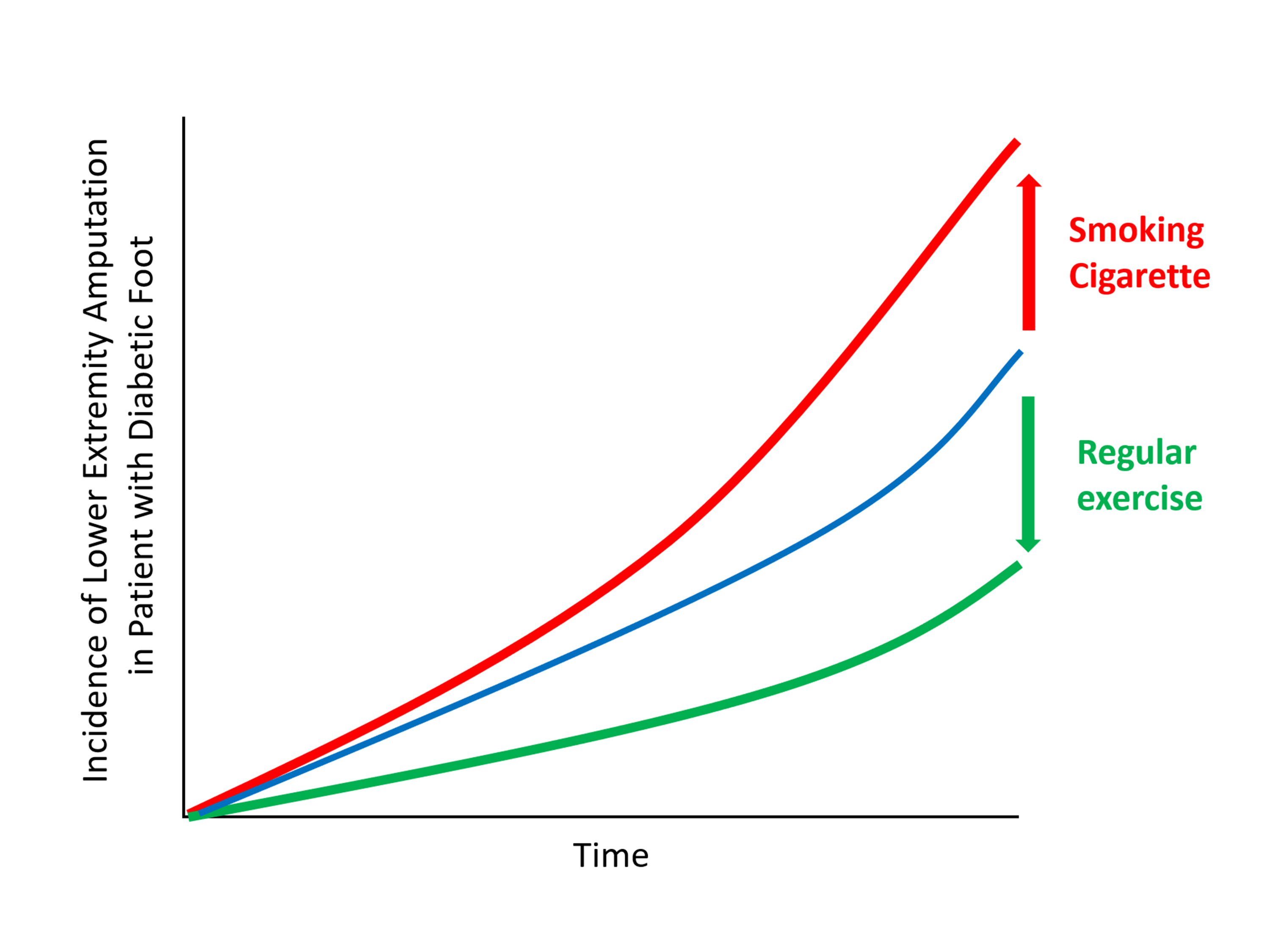
The present study investigates whether modifiable behavioral factors of current cigarette smoking, heavy alcohol consumption, and regular exercise are associated with risk of lower extremity amputation (LEA) in diabetic patients.
Methods
A total of 2,644,440 diabetic patients (aged ≥20 years) was analyzed using the database of the Korean National Health Insurance Service. Cox proportional hazard regression was used to assess adjusted hazard ratios (HRs) for the behavioral factors with risk of LEA under adjustment for potential confounders.
Results
The risk of LEA was significantly increased by current cigarette smoking and heavy alcohol consumption (HR, 1.436; 95% confidence interval [CI], 1.367 to 1.508 and HR, 1.082; 95% CI, 1.011 to 1.158) but significantly decreased with regular exercise (HR, 0.745; 95% CI, 0.706 to 0.786) after adjusting for age, sex, smoking, alcohol consumption, exercise, low income, hypertension, dyslipidemia, body mass index, using insulin or oral antidiabetic drugs, and diabetic duration. A synergistically increased risk of LEA was observed with larger number of risky behaviors.
Conclusion
Modification of behaviors of current smoking, heavy alcohol intake, and exercise prevents LEA and can improve physical, emotional, and social quality of life in diabetic patients. -
Citations
Citations to this article as recorded by- Association Between Diabetic Foot Lesions and Diabetic Foot Ulcers: A Cross-Sectional Study
Moe Murai, Yoshitaka Hashimoto, Haruka Utsuyama, Takashi Ogasawara, Akifumi Shiota, Nozomi Yoshioka, Yusuke Hamazawa, Michiaki Fukui
Journal of Clinical Medicine.2026; 15(10): 3754. CrossRef - International consensus recommendations for smoking cessation in type 2 diabetes from the DiaSmokeFree Working group
Magdalena Walicka, Cristina Russo, Antonio Ceriello, Jacob George, Davide Campagna, Anoop Misra, Giusy Rita Maria La Rosa, Roberta Sammut, Riccardo Polosa
Diabetes Research and Clinical Practice.2026; : 113528. CrossRef - Fatores associados à amputação de membros inferiores em pacientes diabéticos: uma abordagem epidemiológica
Edimar Chaves Junior, Ana Clara Paulino Queiroz, Arthur Felipe Vieira Bastos, Isadora Borges Toledo, Jessica Coelho Costa, Julien Barbosa, Lilian Nunes de Assis Lacerda, Marcos Bruno Couto Garcia, Maria Eduarda Avelina Bontempo, Maria Eduarda Mendes Reis,
Caderno Pedagógico.2025; 22(1): e13493. CrossRef - Are There Sex Differences in the Association of Alcohol Consumption With the Risk of Soft Tissue Sarcoma? A Nationwide Population-based Study in Korea
Min Wook Joo, Kyungdo Han, Yoon Joo Cho, Nicholas Matthew Bernthal, Ye Bin Park
Clinical Orthopaedics & Related Research.2025; 483(9): 1583. CrossRef - Knowledge, attitudes, and practices among patients with diabetic foot ulcers towards disease management
Liangxiao Xie, Changshun Wei, Liqun Chen, Huaqiang Zheng, Jiajia Dong, Jinzhi Wu
Scientific Reports.2025;[Epub] CrossRef - Diabetes‐Associated Major Limb Amputation in Solomon Islands: A National, 5‐Year Retrospective Study
Dylan M. Bush, Adrian Garcia Hernandez, Anita Pickard, Thomas H. Fitzpatrick, Rooney Jagilly, Micky Olangi, Michael Buin, Johanna Roth, Hendrick Kaniki, Jones Ghabu, Tony Quity, Alexandra L. Martiniuk
World Journal of Surgery.2025; 49(8): 2266. CrossRef - The Severity of Diabetes and the Risk of Diabetic Foot Amputation: A National Cohort Study
Jin Yu, Ji-Hyun Kim, Bongseong Kim, Kyungdo Han, Seung Hwan Lee, Mee Kyoung Kim
Endocrinology and Metabolism.2025; 40(4): 574. CrossRef - Nationwide study of income-based disparities in diabetic limb preservation in South Korea
Yoon Jae Lee, Kyung-Do Han, Jun Hyeok Kim
Scientific Reports.2025;[Epub] CrossRef - Adjuvant effect of antimicrobial photodynamic therapy (aPDT) in the treatment of diabetic foot ulcers: A case series
Rita de Cassia Ferreira, Rebeca Boltes Cecatto, Silvana Torres Perez, Raquel Agnelli Mesquita‐Ferrari, Sandra Kalil Bussadori, Cinthya Cosme Duran, Anna Carolina Tempestini Horliana, Kristianne Porta Santos Fernandes
Journal of Biophotonics.2024;[Epub] CrossRef - Factors associated with diabetic foot ulcers and lower limb amputations in type 1 and type 2 diabetes supported by real‐world data from the German/Austrian DPV registry
Alexander J. Eckert, Stefan Zimny, Marcus Altmeier, Ana Dugic, Anton Gillessen, Latife Bozkurt, Gabriele Götz, Wolfram Karges, Frank J. Wosch, Stephan Kress, Reinhard W. Holl
Journal of Diabetes.2024;[Epub] CrossRef - Patients with diabetic foot ulcers: A qualitative study of patient knowledge, experience, and encountered obstacles
Vahide Semerci Çakmak, Serap Çetinkaya Özdemir
Journal of Tissue Viability.2024; 33(4): 571. CrossRef - A randomized controlled trial of an app-based intervention on physical activity and glycemic control in people with type 2 diabetes
Gyuri Kim, Seohyun Kim, You-Bin Lee, Sang-Man Jin, Kyu Yeon Hur, Jae Hyeon Kim
BMC Medicine.2024;[Epub] CrossRef - Influence of quitting smoking on diabetes-related complications: A scoping review with a systematic search strategy
Magdalena Walicka, Arkadiusz Krysiński, Giusy Rita Maria La Rosa, Ang Sun, Davide Campagna, Agostino Di Ciaula, Tabinda Dugal, Andre Kengne, Phuong Le Dinh, Anoop Misra, Riccardo Polosa, Syed Abbas Raza, Cristina Russo, Roberta Sammut, Noel Somasundaram
Diabetes & Metabolic Syndrome: Clinical Research & Reviews.2024; 18(5): 103044. CrossRef - Visceral Adiposity as an Independent Risk Factor for Diabetic Peripheral Neuropathy in Type 2 Diabetes Mellitus: A Retrospective Study
Rui-Ling Wu, Niyao Chen, Yanni Chen, Xiaohong Wu, Chih-Yuan Ko, Xiao-Yu Chen, Takayuki Masaki
Journal of Diabetes Research.2024;[Epub] CrossRef - Age Characteristics of Patients With Type 2 Diabetic Foot Ulcers and Predictive Risk Factors for Lower Limb Amputation: A Population‐Based Retrospective Study
Yuanying Yao, Lei Chen, Yu Qian, Munmun Chattopadhyay
Journal of Diabetes Research.2024;[Epub] CrossRef - Investigating Diabetic Foot Pathophysiology and Amputation Prevention Strategies through Behavioral Modification
Jun Hyeok Kim
Journal of Wound Management and Research.2023; 19(3): 167. CrossRef
- Association Between Diabetic Foot Lesions and Diabetic Foot Ulcers: A Cross-Sectional Study
- Diabetes, Obesity and Metabolism
Big Data Articles (National Health Insurance Service Database) - The Effects of Glucose Lowering Agents on the Secondary Prevention of Coronary Artery Disease in Patients with Type 2 Diabetes
- Inha Jung, Hyemi Kwon, Se Eun Park, Kyung-Do Han, Yong-Gyu Park, Eun-Jung Rhee, Won-Young Lee
- Endocrinol Metab. 2021;36(5):977-987. Published online October 14, 2021
- DOI: https://doi.org/10.3803/EnM.2021.1046
- 9,550 View
- 199 Download
- 7 Web of Science
- 6 Crossref
-
Abstract
PDFSupplementary MaterialPubReader ePub
- Background
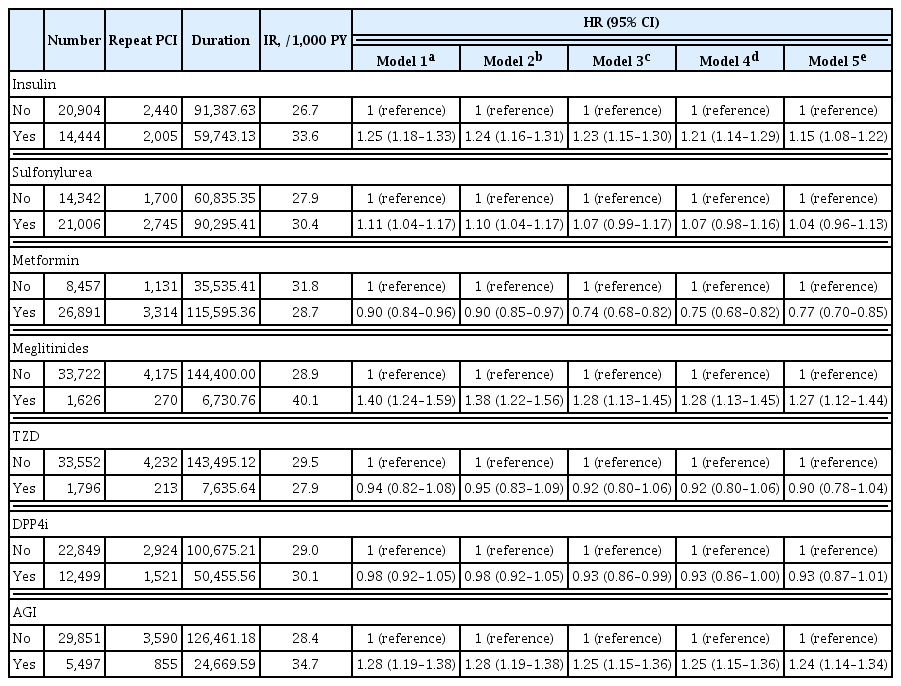
Patients with diabetes have a higher risk of requiring repeated percutaneous coronary intervention (PCI) than non-diabetic patients. We aimed to evaluate and compare the effects of anti-diabetic drugs on the secondary prevention of myocardial infarction among type 2 diabetes mellitus patients.
Methods
We analyzed the general health check-up dataset and claims data of the Korean National Health Insurance Service of 199,714 participants (age ≥30 years) who underwent PCIs between 2010 and 2013. Those who underwent additional PCI within 1 year of their first PCI (n=3,325) and those who died within 1 year (n=1,312) were excluded. Patients were classified according to their prescription records for glucose-lowering agents. The primary endpoint was the incidence rate of coronary revascularization.
Results
A total of 35,348 patients were included in the study. Metformin significantly decreased the risk of requiring repeat PCI in all patients (adjusted hazard ratio [aHR], 0.77). In obese patients with body mass index (BMI) ≥25 kg/m2, patients treated with thiazolidinedione (TZD) exhibited a decreased risk of requiring repeat revascularization than those who were not treated with TZD (aHR, 0.77; 95% confidence interval, 0.63 to 0.95). Patients treated with metformin showed a decreased risk of requiring revascularization regardless of their BMI. Insulin, meglitinide, and alpha-glucosidase inhibitor were associated with increased risk of repeated PCI.
Conclusion
The risk of requiring repeat revascularization was lower in diabetic patients treated with metformin and in obese patients treated with TZD. These results suggest that physicians should choose appropriate glucose-lowering agents for the secondary prevention of coronary artery disease. -
Citations
Citations to this article as recorded by- Cardiovascular preventive role of thiazolidinedione in patients with type 2 diabetes mellitus undergoing percutaneous coronary intervention
Jinkwon Kim, Jimin Jeon, Joonsang Yoo, Minyoul Baik, Seok‐Jae Heo, Ji Woong Roh
Journal of Diabetes Investigation.2026;[Epub] CrossRef - Innovative Lipid-Lowering Strategies: RNA-Based, Small Molecule, and Protein-Based Therapies
Youngwoo Jang, Eun-Jung Rhee, Sung Hee Choi
Endocrinology and Metabolism.2025; 40(5): 668. CrossRef - Preadmission metformin use increased the incidence of hyperlactatemia at admission and 30-day in-hospital mortality among T2D patients with heart disease at high risk of hypoxia
Le Zhang, Xia Zhao, Zhongsu Wang, Hao Deng, Xue Zhang, Xuan Wang, Jiahui Lao, Mei Gao, Yinglong Hou, Yi Han
International Journal of Cardiology.2024; 412: 132338. CrossRef - Application of systemic inflammation indices and lipid metabolism-related factors in coronary artery disease
Zhuoyan Zhao, Huan Lian, Yixiang Liu, Lixian Sun, Ying Zhang
Coronary Artery Disease.2023; 34(5): 306. CrossRef - Effect of metformin on adverse outcomes in T2DM patients: Systemic review and meta-analysis of observational studies
Zhicheng Xu, Haidong Zhang, Chenghui Wu, Yuxiang Zheng, Jingzhou Jiang
Frontiers in Cardiovascular Medicine.2022;[Epub] CrossRef - Establishment of a Predictive Model for Poor Prognosis of Incomplete Revascularization in Patients with Coronary Heart Disease and Multivessel Disease
Huan Lian, Zhuoyan Zhao, Kelin Ma, Zhenjiang Ding, Lixian Sun, Ying Zhang
Clinical and Applied Thrombosis/Hemostasis.2022;[Epub] CrossRef
- Cardiovascular preventive role of thiazolidinedione in patients with type 2 diabetes mellitus undergoing percutaneous coronary intervention
- Clinical Study
- The Prevalence and Risk of Type 2 Diabetes in Adults with Disabilities in Korea
- Inha Jung, Hyemi Kwon, Se Eun Park, Kyung-Do Han, Yong-Gyu Park, Eun-Jung Rhee, Won-Young Lee
- Endocrinol Metab. 2020;35(3):552-561. Published online July 22, 2020
- DOI: https://doi.org/10.3803/EnM.2020.653
- 13,700 View
- 228 Download
- 20 Web of Science
- 22 Crossref
-
Abstract
PDFSupplementary MaterialPubReader ePub
- Background
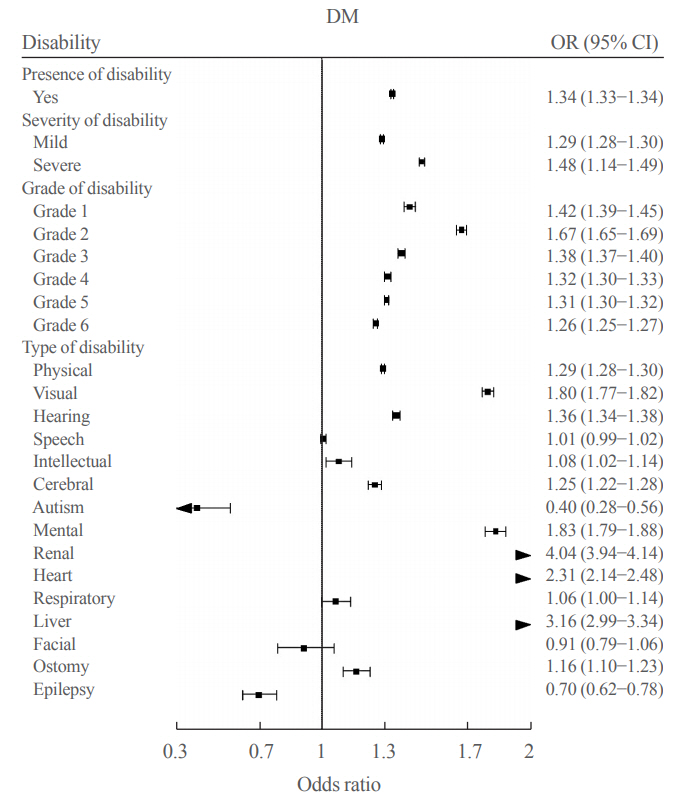
People with disabilities are at risk of secondary conditions such as diabetes. The aim of this study was to evaluate the prevalence and risk of type 2 diabetes in South Korea, especially among people with all types of disabilities.
Methods
We conducted a cross-sectional study using data from the Korean National Health Insurance Service, with two disabilityfree controls matched for each participant with disabilities by age and sex. Information regarding the type, severity and grade of disabilities was obtained based on the National Disability Registry. Diagnosis of type 2 diabetes was defined according to the following criteria: presence of International Classification of Diseases, Tenth Revision, Clinical Modification codes E11, E12, E13, or E14 and claims for at least one oral anti-diabetic agent or insulin at baseline, or fasting glucose level ≥126 mg/dL.
Results
We included 1,297,806 participants with disabilities and 2,943,719 control. Out of 4,241,525 participants, 841,990 (19.9%) were diagnosed with diabetes. The prevalence of diabetes was higher in the disability group compared with individuals without disabilities (23.1% vs. 18.4%). The odds of having diabetes was higher in the disability group compared with the control group (adjusted odds ratio, 1.34; 95% confidence interval, 1.33 to 1.34). The results showed higher prevalence of diabetes in the mildly disabled group (23.2%) than in the severely disabled group (22.7%).
Conclusion
The prevalence and risk of diabetes were higher in people with disabilities compared with the general population. Physicians and public health authorities should focus on people with disabilities for proper diabetes management. -
Citations
Citations to this article as recorded by- Association of disability with cardiovascular mortality in the community-dwelling Spanish adult population
Roberto Pastor-Barriuso, Alicia Padrón-Monedero, Fernando J. García López, Javier Almazán-Isla, Jesús de Pedro-Cuesta, Javier Damián
Revista Española de Cardiología (English Edition).2026; 79(1): 3. CrossRef - Asociación de la discapacidad con la mortalidad cardiovascular en la población adulta española no institucionalizada
Roberto Pastor-Barriuso, Alicia Padrón-Monedero, Fernando J. García López, Javier Almazán-Isla, Jesús de Pedro-Cuesta, Javier Damián
Revista Española de Cardiología.2026; 79(1): 3. CrossRef - Intellectual disabilities and risk of cardiovascular diseases: A population-based cohort study
In Young Cho, Hye Yeon Koo, Yoo Jin Um, Yong-Moon Mark Park, Kyung Mee Kim, Chung Eun Lee, Kyungdo Han
Disability and Health Journal.2025; 18(2): 101754. CrossRef - Impact of acupuncture on mortality in patients with disabilities and newly diagnosed heart failure: a nationwide cohort study
Hyungsun Jun, Dasol Park, Jae-Uk Sul, Moon Joo Cheong, Haerim Kim, Inae Youn, Jungtae Leem
Frontiers in Medicine.2025;[Epub] CrossRef - Risk of Diabetes Mellitus in Adults with Intellectual Disabilities: A Nationwide Cohort Study
Hye Yeon Koo, In Young Cho, Yoo Jin Um, Yong-Moon Mark Park, Kyung Mee Kim, Chung Eun Lee, Kyungdo Han
Endocrinology and Metabolism.2025; 40(1): 103. CrossRef - The Role of Physical Activity in Determining the Association between Metabolic Syndrome and Type-2 Diabetes in Older People with Disabilities
Minjeong Kang, Hyunsik Kang
Journal of The Korean Society of Living Environmental System.2025; 32(2): 135. CrossRef - Cardiometabolic Diseases and Mental Health Disorders in Korean Adults With Disabilities: A 3-Year Retrospective Analysis and Risk Comparison
Shiva Raj Acharya, NamKwen Kim, Navin Ray, Diwash Timilsina
American Journal of Preventive Medicine.2025; 69(3): 107938. CrossRef - Short-Term and Long-Term Risk of Diabetes Mellitus among Patients with Spinal Cord Injury: A Nationwide Retrospective Cohort Study
Seonghye Kim, Kyung-Do Han, Bongseong Kim, Ju-Hong Min, Won Hyuk Chang, In Young Cho, Dong Wook Shin
Healthcare.2024; 12(18): 1859. CrossRef - Widening disparities in the national prevalence of diabetes mellitus for people with disabilities in South Korea
I. Hwang, S.Y. Kim, Y.Y. Kim, J.H. Park
Public Health.2024; 226: 173. CrossRef - Bipolar disorder and the risk of cardiometabolic diseases, heart failure, and all-cause mortality: a population-based matched cohort study in South Korea
You-Bin Lee, Hyewon Kim, Jungkuk Lee, Dongwoo Kang, Gyuri Kim, Sang-Man Jin, Jae Hyeon Kim, Hong Jin Jeon, Kyu Yeon Hur
Scientific Reports.2024;[Epub] CrossRef - Psychotic Disorders and the Risk of Type 2 Diabetes Mellitus, Atherosclerotic Cardiovascular Diseases, and All-Cause Mortality: A Population-Based Matched Cohort Study
You-Bin Lee, Hyewon Kim, Jungkuk Lee, Dongwoo Kang, Gyuri Kim, Sang-Man Jin, Jae Hyeon Kim, Hong Jin Jeon, Kyu Yeon Hur
Diabetes & Metabolism Journal.2024; 48(1): 122. CrossRef - Pathways linking health literacy to self-care in diabetic patients with physical disabilities: A moderated mediation model
Hye Jin Nam, Ju Young Yoon, Wen-Jun Tu
PLOS ONE.2024; 19(3): e0299971. CrossRef - Cross-Sectional Analysis of Difficulties Using Usual Source of Care for People with Disability
Jane Ko, Jae-Hyun Park
INQUIRY: The Journal of Health Care Organization, Provision, and Financing.2024;[Epub] CrossRef - The First Use of the Washington Group Short Set in a National Survey of Japan: Characteristics of the New Disability Measure in Comparison to an Existing Disability Measure
Takashi Saito, Kumiko Imahashi, Chikako Yamaki
International Journal of Environmental Research and Public Health.2024; 21(12): 1643. CrossRef - Dysphagia Requiring Medical Attention in Parkinson’s Disease: A Korean Population-Based Study
Seungwoo Cha, Won Kee Chang, Hee-Mun Cho, Kyungdo Han, Nam-Jong Paik, Sohyun Kwon, Won-Seok Kim
Journal of Korean Medical Science.2023;[Epub] CrossRef - Disparities in diabetes-related avoidable hospitalization among diabetes patients with disability using a nationwide cohort study
Hin Moi Youn, Dong-Woo Choi, Sung-In Jang, Eun-Cheol Park
Scientific Reports.2022;[Epub] CrossRef - Disability type–specific mortality patterns and life expectancy among disabled people in South Korea using 10-year combined data between 2008 and 2017
Jinwook Bahk, Hee-Yeon Kang, Young-Ho Khang
Preventive Medicine Reports.2022; 29: 101958. CrossRef - Cholecystectomy reduces the risk of myocardial and cerebral infarction in patients with gallstone-related infection
Seon Mee Park, Hyun Jung Kim, Tae Uk Kang, Heather Swan, Hyeong Sik Ahn
Scientific Reports.2022;[Epub] CrossRef - Nationwide trends in the incidence of tuberculosis among people with disabilities in Korea:
a nationwide serial cross-sectional study
Jinsoo Min, So Young Kim, Jong Eun Park, Yeon Yong Kim, Jong Hyock Park
Epidemiology and Health.2022; 44: e2022098. CrossRef - Prevalence of Type 2 Diabetes among Persons with Disabilities in the South-East Asian Region
Rajeswaran Thiagesan, Vijayaprasad Gopichandran, Sudharshini Subramaniam, Hilaria Soundari, Kalpana Kosalram
Current Medical Issues.2022; 20(3): 161. CrossRef - Cumulative exposure to impaired fasting glucose and future risk of type 2 diabetes mellitus
Mee Kyoung Kim, Kyungdo Han, Eun Sil Koh, Oak-Kee Hong, Ki-Hyun Baek, Ki-Ho Song, Hyuk-Sang Kwon
Diabetes Research and Clinical Practice.2021; 175: 108799. CrossRef - Diabetes in People with Disabilities: a Call for Action
Inha Jung, Eun-Jung Rhee, Won-Young Lee
Cardiovascular Prevention and Pharmacotherapy.2021; 3(4): 82. CrossRef
- Association of disability with cardiovascular mortality in the community-dwelling Spanish adult population
- Thyroid
- Prevalence and Annual Incidence of Thyroid Disease in Korea from 2006 to 2015: A Nationwide Population-Based Cohort Study
- Hyemi Kwon, Jin-hyung Jung, Kyung-Do Han, Yong-Gyu Park, Jung-Hwan Cho, Da Young Lee, Ji Min Han, Se Eun Park, Eun-Jung Rhee, Won-Young Lee
- Endocrinol Metab. 2018;33(2):260-267. Published online June 21, 2018
- DOI: https://doi.org/10.3803/EnM.2018.33.2.260
- 14,344 View
- 178 Download
- 52 Web of Science
- 50 Crossref
-
Abstract
PDFPubReader ePub
Background The incidence of thyroid nodules has increased worldwide in recent years. Thyroid dysfunction is a potential risk factor for hypercholesterolemia, cardiovascular disease, osteoporosis, arrhythmia, and neuropsychiatric disease. This study investigated the prevalence and annual incidence of thyroid nodules, hypothyroidism, and hyperthyroidism in Koreans.
Methods In this nationwide population-based cohort study, 51,834,660 subjects were included using the National Health Information database from 2006 to 2015, after the exclusion of subjects with thyroid cancer.
Results The prevalence in Korea in 2015 of thyroid nodules, hypothyroidism in patients taking thyroid hormone, and hyperthyroidism in patients undergoing treatment was 15.82/1,000 population, 15.94/1,000 population, and 2.76/1,000 population, respectively. All these diseases were more prevalent among women than among men. The number of incident cases of these three thyroid diseases steadily increased from 2006 to 2012, and then decreased through 2015. The incidence of thyroid nodules, hypothyroidism treated with thyroid hormone, and treated hyperthyroidism was 6.79/1,000 population, 1.76/1,000 population, and 0.55/1,000 population, respectively, in Korea in 2015. The use of methimazole continuously increased, from 33% of total antithyroid drug prescriptions in 2006 to 74.4% in 2015, and it became the most frequently prescribed antithyroid drug in Korea. In contrast, the use of propylthiouracil continuously decreased.
Conclusion This was the first nationwide study of the prevalence and annual incidence of thyroid nodules, hypothyroidism, and hyperthyroidism to take into account recent changes and to include the current status of patients receiving treatment.
-
Citations
Citations to this article as recorded by- Development of a Machine Learning-based Model for Methimazole Dosage Adjustment in Youth With Hyperthyroidism
Joon Young Kim, Kanghyuck Lee, Eunsik Choi, Jun Suk Oh, Eun Byoul Lee, Hyun Wook Chae, Taehoon Ko, Kyungchul Song
The Journal of Clinical Endocrinology & Metabolism.2026; 111(4): e1136. CrossRef - Association between Benign Thyroid Disorders and Breast Cancer Risk in Korean Women
Boyoung Park, Thi Xuan Mai Tran
Cancer Research and Treatment.2026; 58(1): 141. CrossRef - Thyroid dysfunction and its associated factors: a cross-sectional study based on Rafsanjan cohort study in the southeast of Iran
Lida Soltani, Shahin Heidari, Parvin Khalili, Fariba Mazhari, Fatemeh Ayoobi, Mahmood Kahnooji, Zahra Jamali
BMJ Open.2026; 16(9): e110188. CrossRef - Risk of non-thyroidal autoimmune diseases in patients with Graves’ disease: a nationwide retrospective cohort study
Seo Young Sohn, Jiyeon Ahn, Min Kyung Lee, Jae Hyuk Lee, Ji-Won Kwon, Ji-Min Kweon, Ju-Yeun Lee
Rheumatology.2025; 64(1): 303. CrossRef - Graves’ Disease and the Risk of Type 2 Diabetes: A Korean Population-Based Study
Yoon Young Cho, Bongseong Kim, Sang-Man Jin, Chan-Hee Jung, Ji Oh Mok, Sun Wook Kim, Jae Hoon Chung, Kyung-Do Han, Tae Hyuk Kim
Thyroid®.2025; 35(1): 60. CrossRef - Incidence and Risk Factors for Amiodarone-Induced Thyroid Dysfunction: A Nationwide Retrospective Cohort Study
Seo Young Sohn, Yun Jin Kim, Sungsoo Cho, Sung Woo Cho
American Journal of Cardiovascular Drugs.2025; 25(3): 419. CrossRef - Risk of psychiatric disorders in patients with graves' disease: A nationwide population-based analysis
Ju-Yeun Lee, Minha Hong, Young Hee Jung, Seo Young Sohn
Journal of Affective Disorders.2025; 385: 119386. CrossRef - New Onset of Hair Loss Disorders During the Coronavirus Disease 2019 Pandemic: A Korean Nationwide Population-Based Study
Youngjoo Cho, Ji Won Lim, Yi Na Yoon, Chang Yong Kim, Yang Won Lee, Yong Beom Choe, Da-Ae Yu
Annals of Dermatology.2025; 37(4): 250. CrossRef - New-onset atrial fibrillation in seropositive rheumatoid arthritis: association with disease-modifying anti-rheumatic drugs treatment
Hyung Woo Kim, Minkyung Han, Inkyung Jung, Sung Soo Ahn
Rheumatology.2024; 63(3): 630. CrossRef - Nonalcoholic Fatty Liver Disease and the Risk of Thyroid Cancer Among Young Adults in South Korea
Hyemi Kwon, Kyung-Do Han, Sun Joon Moon, Se Eun Park, Eun-Jung Rhee, Won-Young Lee
The Journal of Clinical Endocrinology & Metabolism.2024; 109(3): e1095. CrossRef - Endocrine and metabolic comorbidities in primary cicatricial alopecia: A nationwide population‐based study
Da‐Ae Yu, Seong Rae Kim, Soo Ick Cho, Ohsang Kwon
The Journal of Dermatology.2024; 51(3): 429. CrossRef - Cancer Risk in Graves Disease with Radioactive131I Treatment: A Nationwide Cohort Study
Kyeong Jin Kim, Jimi Choi, Kyoung Jin Kim, Eyun Song, Ji Hee Yu, Nam Hoon Kim, Hye Jin Yoo, Ji A Seo, Nan Hee Kim, Kyung Mook Choi, Sei Hyun Baik, Sin Gon Kim
Journal of Nuclear Medicine.2024; 65(5): 693. CrossRef - Long-term Effect of Thyrotropin-binding Inhibitor Immunoglobulin on Atrial Fibrillation in Euthyroid Patients
Jung-Chi Hsu, Kang-Chih Fan, Ting-Chuan Wang, Shu-Lin Chuang, Ying-Ting Chao, Ting-Tse Lin, Kuan-Chih Huang, Lian-Yu Lin, Lung-Chun Lin
Endocrine Practice.2024; 30(6): 537. CrossRef - Myotonic dystrophy type 1 in South Korea: a comprehensive analysis of cancer and comorbidity risks
Incheol Seo, Jin-Mo Park
Neurological Sciences.2024; 45(9): 4573. CrossRef - The relationship between dietary total flavonoids and thyroid function in U.S.adults, NHANES 2007–2010
Jie Wu, Chuyu Jia, Zirui Zhang, Zebin Hou, Yanhua Cui, Yuyan Wang
PLOS ONE.2024; 19(5): e0303169. CrossRef - Epidemiology of Carpal Tunnel Syndrome and Trigger Finger in South Korea: A Nationwide Population-Based Study
Min-Seo Kim, Jae Kwang Kim, Ye-Jee Kim, Young Ho Shin
Clinics in Orthopedic Surgery.2024; 16(5): 774. CrossRef - Cancer Risks of Patients with Graves’ Disease Who Received Antithyroid Drugs as Initial Treatment: A Nationwide Population-Based Analysis
Ju-Yeun Lee, Min Kyung Lee, Jae Hyuk Lee, Kyungsik Kim, Kunho Bae, Seo Young Sohn
Thyroid®.2024; 34(10): 1271. CrossRef - National trends in thyroid disease and COVID-19 pandemic-related factors, 1998–2021: A nationwide representative study in South Korea
Kyeongmin Lee, Jaeyu Park, Myeongcheol Lee, Hojae Lee, Yejun Son, Hyejun Kim, Jiseung Kang, Yujin Choi, Sang Youl Rhee, Masoud Rahmati, Ai Koyanagi, Lee Smith, Guillermo F. López Sánchez, Elena Dragioti, Selin Woo, Dong Keon Yon
Heliyon.2024; 10(20): e39401. CrossRef - Rising Incidence and Comorbidities of Endogenous Hypothyroidism in Republic of Korea from 2004 to 2018: A Nationwide Population Study
Chae Won Chung, Hwa Young Ahn, Sun Wook Cho, Ka Hee Yi
Endocrinology and Metabolism.2024; 39(6): 891. CrossRef - Association of ITM2A rs1751094 polymorphism on X chromosome in Korean pediatric patients with autoimmune thyroid disease
Won K. Cho, In‐Cheol Baek, Sung E. Kim, Mirae Kim, Tai‐Gyu Kim, Byung‐Kyu Suh
Immunity, Inflammation and Disease.2023;[Epub] CrossRef - Preoperative Risk Stratification of Follicular-patterned Thyroid Lesions on Core Needle Biopsy by Histologic Subtyping and RAS Variant-specific Immunohistochemistry
Meejeong Kim, Sora Jeon, Chan Kwon Jung
Endocrine Pathology.2023; 34(2): 247. CrossRef - Cancer and Mortality Risks of Graves’ Disease in South Korea Based on National Data from 2010 to 2019
Young Ju Choi, Kyungdo Han, Won Kyoung Cho, Min Ho Jung, Byung-Kyu Suh
Clinical Epidemiology.2023; Volume 15: 535. CrossRef - Acromegaly and the long-term fracture risk of the vertebra and hip: a national cohort study
Hyemi Kwon, Kyung-Do Han, Bong-Sung Kim, Sun Joon Moon, Se Eun Park, Eun-Jung Rhee, Won-Young Lee
Osteoporosis International.2023; 34(9): 1591. CrossRef - Association of Thyroid Hormone Medication Adherence With Risk of Dementia
Saemi Han, Seogsong Jeong, Seulggie Choi, Sun Jae Park, Kyae Hyung Kim, Gyeongsil Lee, Yoosun Cho, Joung Sik Son, Sang Min Park
The Journal of Clinical Endocrinology & Metabolism.2023; 109(1): e225. CrossRef - Increased risk of incident gout in patients with hyperthyroidism: a nationwide retrospective cohort study
Ju-Yeun Lee, So-Yeon Park, Seo Young Sohn
Rheumatology International.2023; 44(3): 451. CrossRef - The Current Status of Hyperthyroidism in Korea
Hyemi Kwon
Endocrinology and Metabolism.2023; 38(4): 392. CrossRef - Prevalence, Treatment Status, and Comorbidities of Hyperthyroidism in Korea from 2003 to 2018: A Nationwide Population Study
Hwa Young Ahn, Sun Wook Cho, Mi Young Lee, Young Joo Park, Bon Seok Koo, Hang-Seok Chang, Ka Hee Yi
Endocrinology and Metabolism.2023; 38(4): 436. CrossRef - Comprehensive analysis of chemokine gene polymorphisms in Korean children with autoimmune thyroid disease
Chungwoo Shin, In-Cheol Baek, Won Kyoung Cho, Tai-Gyu Kim, Byung-Kyu Suh
Scientific Reports.2023;[Epub] CrossRef - Analysis of the status of treatment of benign thyroid diseases — a public health problem aggravated in the COVID-19 pandemic era
Giulianno Molina Melo, Antonio José Gonçalves, Fernando Walder, Carolina Ferraz, Murilo Catafesta Neves, Marcio Abrahão, Onivaldo Cervantes
Brazilian Journal of Otorhinolaryngology.2022; 88(6): 982. CrossRef - Graves’ disease and the risk of Parkinson’s disease: a Korean population-based study
Yoon Young Cho, Bongseong Kim, Dong Wook Shin, Jinyoung Youn, Ji Oh Mok, Chul-Hee Kim, Sun Wook Kim, Jae Hoon Chung, Kyungdo Han, Tae Hyuk Kim
Brain Communications.2022;[Epub] CrossRef - Graves’ Disease and the Risk of End-Stage Renal Disease: A Korean Population-Based Study
Yoon Young Cho, Bongseong Kim, Dong Wook Shin, Hye Ryoun Jang, Bo-Yeon Kim, Chan-Hee Jung, Jae Hyeon Kim, Sun Wook Kim, Jae Hoon Chung, Kyungdo Han, Tae Hyuk Kim
Endocrinology and Metabolism.2022; 37(2): 281. CrossRef - Incidence of hypothyroidism after treatment for breast cancer: A Korean population-based study
Jongmoo Park, Choongrak Kim, Yongkan Ki, Wontaek Kim, Jiho Nam, Donghyun Kim, Dahl Park, Hosang Jeon, Dong Woon Kim, Ji Hyeon Joo, Claudio Andaloro
PLOS ONE.2022; 17(6): e0269893. CrossRef - Genome-wide association study of hyperthyroidism based on electronic medical record from Taiwan
Ting-Yuan Liu, Wen-Ling Liao, Tzu-Yuan Wang, Chia-Jung Chan, Jan-Gowth Chang, Yu-Chia Chen, Hsing-Fang Lu, Hsien-Hui Yang, Shih-Yin Chen, Fuu-Jen Tsai
Frontiers in Medicine.2022;[Epub] CrossRef - Graves’ disease, its treatments, and the risk of atrial fibrillation: A Korean population-based study
Yoon Young Cho, Bongseong Kim, Dughyun Choi, Chul-Hee Kim, Dong Wook Shin, Jee Soo Kim, Seung-Jung Park, Sun Wook Kim, Jae Hoon Chung, Kyungdo Han, Tae Hyuk Kim
Frontiers in Endocrinology.2022;[Epub] CrossRef - Análise da situação do tratamento das doenças benignas da tireoide – Um problema de saúde pública agravado pela pandemia de Covid‐19
Giulianno Molina Melo, Antonio José Gonçalves, Fernando Walder, Carolina Ferraz, Murilo Catafesta Neves, Marcio Abrahão, Onivaldo Cervantes
Brazilian Journal of Otorhinolaryngology (Versão em Português).2022; 88(6): 982. CrossRef - Risk of autoimmune diseases in recurrent aphthous ulcer patients: A nationwide population study
Young Chan Lee, Su Jin Jeong, Young‐Gyu Eun, Ran Song, In‐Hwan Oh
Oral Diseases.2021; 27(6): 1443. CrossRef - Hyperthyroidism Prevalence in China After Universal Salt Iodization
Chuyuan Wang, Yongze Li, Di Teng, Xiaoguang Shi, Jianming Ba, Bing Chen, Jianling Du, Lanjie He, Xiaoyang Lai, Yanbo Li, Haiyi Chi, Eryuan Liao, Chao Liu, Libin Liu, Guijun Qin, Yingfen Qin, Huibiao Quan, Bingyin Shi, Hui Sun, Xulei Tang, Nanwei Tong, Gui
Frontiers in Endocrinology.2021;[Epub] CrossRef - Comorbidity network analysis related to obesity in middle-aged and older adults: findings from Korean population-based survey data
Hye Ah Lee, Hyesook Park
Epidemiology and Health.2021; 43: e2021018. CrossRef - Prevalence of Hyperthyroidism and Hypothyroidism and its Correlation with Serum Antithyroglobulin among patients in Kirkuk-Iraq
Sabah Mohammed Salih, Wijdan Abdullameer Kamel, Mohammed Talat Abbas, Kasim Sakran Abass
Journal Of Advanced Pharmacy Education And Research.2021; 11(2): 57. CrossRef - A nationwide study of patients with monoclonal gammopathy of undetermined significance with a 10-year follow-up in South Korea
Ka-Won Kang, Ji Eun Song, Byung-Hyun Lee, Min Ji Jeon, Eun Sang Yu, Dae Sik Kim, Se Ryeon Lee, Hwa Jung Sung, Chul Won Choi, Yong Park, Byung Soo Kim
Scientific Reports.2021;[Epub] CrossRef - Incidence and Mortality of Myocardial Infarction and Stroke in Patients with Hyperthyroidism: A Nationwide Cohort Study in Korea
Hyun Jung Kim, Taeuk Kang, Min Ji Kang, Hyeong Sik Ahn, Seo Young Sohn
Thyroid®.2020; 30(7): 955. CrossRef - Vitamin D supplementation does not prevent the recurrence of Graves’ disease
Yoon Young Cho, Yun Jae Chung
Scientific Reports.2020;[Epub] CrossRef - Binding and Activity of Tetrabromobisphenol A Mono-Ether Structural Analogs to Thyroid Hormone Transport Proteins and Receptors
Xiao-Min Ren, Linlin Yao, Qiao Xue, Jianbo Shi, Qinghua Zhang, Pu Wang, Jianjie Fu, Aiqian Zhang, Guangbo Qu, Guibin Jiang
Environmental Health Perspectives.2020;[Epub] CrossRef - Epidemiology of metabolic syndrome and its components in Chinese patients with a range of thyroid-stimulating hormone concentrations
Kun Tang, Qiao Zhang, Nian-chun Peng, Miao Zhang, Shu-jing Xu, Hong Li, Ying Hu, Chun-ju Xue, Li-xin Shi
Journal of International Medical Research.2020;[Epub] CrossRef - The Association of Overt and Subclinical Hyperthyroidism with the Risk of Cardiovascular Events and Cardiovascular Mortality: Meta-Analysis and Systematic Review of Cohort Studies
Seo Young Sohn, Eunyoung Lee, Min Kyung Lee, Jae Hyuk Lee
Endocrinology and Metabolism.2020; 35(4): 786. CrossRef - Prevalence of Thyroid Disease in Patients Surgically Treated for Pituitary Disease
Daham Kim, Yongin Cho, Cheol Ryong Ku, Hyein Jung, Ju Hyung Moon, Eui Hyun Kim, Dong Yeob Shin, Sun Ho Kim, Eun Jig Lee
Journal of Clinical Medicine.2019; 8(8): 1142. CrossRef - Association of Thyroid-Stimulating Hormone and Thyroid Hormones with Cardiometabolic Risk Factors in Euthyroid Children and Adolescents Aged 10–18 Years: A Population-Based Study
Cheol Gyu Ma, Young Suk Shim
Scientific Reports.2019;[Epub] CrossRef - Weight change is significantly associated with risk of thyroid cancer: A nationwide population-based cohort study
Hyemi Kwon, Kyung-Do Han, Cheol-Young Park
Scientific Reports.2019;[Epub] CrossRef - Evaluation of the relationship of subclinical hypothyroidism with metabolic syndrome and its components in adolescents: a population-based study
Min-Kyung Lee, Yoo Mee Kim, Seo-Young Sohn, Jae-Hyuk Lee, Young Jun Won, Se Hwa Kim
Endocrine.2019; 65(3): 608. CrossRef - Autoimmune thyroiditis and central serous chorioretinopathy may have a relation
Brijesh Takkar, Harsha Saxena, Anubha Rathi, Rekha Singh
Medical Hypotheses.2018; 121: 180. CrossRef
- Development of a Machine Learning-based Model for Methimazole Dosage Adjustment in Youth With Hyperthyroidism
 First
 Prev




