
 KES

Search
- Page Path
- HOME > Search
Original Article
- Thyroid
- BRAF Mutation and Tumor Growth Kinetics during Active Surveillance of Papillary Thyroid Microcarcinoma: A Single-Center Retrospective Study
- Jinyoung Kim, Min Kyoung Lee, Tae-Jung Kim, Dong-Jun Lim, Ki-Hyun Baek
- Endocrinol Metab. 2026;41(3):461-469. Published online June 9, 2026
- DOI: https://doi.org/10.3803/EnM.2025.2821

- 2,294 View
- 56 Download
-
 Abstract
 PDF
 Supplementary Material
 PubReader
 ePub
- Background
We investigated tumor volume doubling time (TVDT) during active surveillance of papillary thyroid microcarcinoma (PTMC) and reviewed clinical factors including BRAF mutation associated with tumor progression.
Methods
Patients with PTMC who deferred surgery for more than 1 year after diagnosis between 2014 and 2021 and were followed until 2023 were enrolled. Inclusion criteria were papillary thyroid carcinoma confirmed by fine needle aspiration cytology (Bethesda categories V–VI), maximal tumor diameter ≤1 cm, and available BRAF mutation testing.
Results
A total of 85 patients were included. The median age was 49 years, and 63 patients (74%) were female. The positivity rate for BRAF mutation was 51% in the study cohort, and 16 patients (19%) showed rapid-growing disease, defined by a TVDT of less than 5 years. The median follow-up duration was 4.4 years, and 23 patients (27%) underwent surgery after a median of 3.2 years. When TVDT groups were analyzed using logistic regression, sonographic features with microcalcification were associated with tumor growth in binary regression (odds ratio for the group combining slowly and rapid-growing disease was 4.34; 95% confidence interval [CI], 1.41 to 13.35; P=0.010), and BRAF mutation was associated with rapid-growing disease in multinomial regression (odds ratio for rapid-growing disease was 4.48; 95% CI, 1.08 to 18.51; P=0.038).
Conclusion
BRAF mutation is presumed to be associated with tumor progression and may predict growth of PTMC. Genetic testing including BRAF testing may help distinguishing rapid-growing thyroid cancer.

Review Article
- Mineral, Bone & Muscle
- Long-Term Efficacy and Safety of Denosumab: Insights beyond 10 Years of Use
- Jeonghoon Ha, Youn-Ju Lee, Jinyoung Kim, Chaiho Jeong, Yejee Lim, Jeongmin Lee, Ki-Hyun Baek, on Behalf of the Catholic Medical Center Bone Research Group
- Endocrinol Metab. 2025;40(1):47-56. Published online January 13, 2025
- DOI: https://doi.org/10.3803/EnM.2024.2125

- 62,409 View
- 1,380 Download
- 14 Web of Science
- 17 Crossref
-
Abstract
PDFPubReader ePub
- Osteoporosis management in post-menopausal women focuses on fracture prevention, with denosumab as a key therapeutic option. Despite its proven efficacy in reducing fracture risk and increasing bone mineral density (BMD) over 10 years, its long-term impact remains uncertain. We evaluated the literature on its efficacy and safety beyond the initial decade. Clinical trials and real-world studies confirm denosumab’s sustained efficacy, especially in lumbar spine BMD, with hip BMD stabilizing. Concerns about adverse events (AEs) like hypocalcemia and osteonecrosis of the jaw necessitate vigilant monitoring. Risks of atypical femoral fractures and malignancies also require attention, despite unclear links to treatment duration. Clinical guidelines for denosumab beyond 10 years are limited, emphasizing the need for careful monitoring. In certain scenarios, such as advanced chronic kidney disease, prolonged denosumab may be required to balance AE risks with fracture prevention benefits. Denosumab shows potential for long-term efficacy in augmenting BMD; however, monitoring for AEs is crucial to guide clinical decision-making effectively.
-
Citations
Citations to this article as recorded by
- Enhancing osteoporosis treatment: emerging roles of engineered exosomes in bone regeneration and repair
Hongtao Li, Hongyu Pan, Minshan Feng
Journal of Translational Medicine.2026;[Epub] CrossRef - Denosumab Therapy Beyond 10 Years: Subsequent Treatment and Densitometric Outcomes
Xi Xiong, Chun Ho Wong, Kimberly H. Tsoi, Connie H.N. Loong, Carol H.Y. Fong, Alan C.H. Lee, Chi Ho Lee, Kathryn C.B. Tan, Yu Cho Woo, Manju Chandran, David T.W. Lui
Endocrine Practice.2026; 32(6): 861. CrossRef - Managing Bone Fragility in Older Adults with Diabetes: Pathophysiology, Assessment, and Therapeutic Considerations
Gulistan Bahat, Tugba Erdogan, Savas Ozturk, Ozlem Soyluk Selcukbiricik, Serdar Ozkok, Dilek Gogas Yavuz, Mehmet Akif Karan, Jean-Yves Reginster
Drugs & Aging.2026; 43(4): 341. CrossRef - Comment on “Bone fragility and atypical femoral fractures in SLE: role of disease activity, infection, and treatment”
Manish Juneja, Harshawardhan Ramteke, Rakhshanda Khan
Journal of Bone and Mineral Metabolism.2026;[Epub] CrossRef - Synergistic Efficacy of Calcitriol Combined with Denosumab versus Calcitriol Alone in Postmenopausal Osteoporosis: A Retrospective Cohort Study
Xueyuan Li, Ming Hu, Yi Shen
International Journal of Women's Health.2026; Volume 18: 1. CrossRef - Diagnosis and treatment of osteoporosis: 2026 recommendations of the Polish Society for Rheumatology
Piotr Leszczyński, Cezary Iwaszkiewicz, Zbigniew Michał Żuber, Brygida Kwiatkowska, Bogdan Piotr Batko, Katarzyna Krystyna Pawlak-Buś
Rheumatology.2026;[Epub] CrossRef - Challenges in Sequential Antiresorptive Therapy After Long-Term Denosumab Discontinuation: A Case Report and Narrative Review of the Literature
Maria-Evangelia Koloutsou, Melina Despina Pieper, Maria Mateniadou, Angeliki Papapanagiotou, Athanasios D. Anastasilakis, Polyzois Makras, Maria P. Yavropoulou
Journal of Clinical Medicine.2026; 15(14): 5443. CrossRef - Three-year longitudinal assessment of denosumab’s efficacy and safety in postmenopausal osteoporosis: a 36-month real-world cohort study
Rong-Lin Xia, Chen Li, Li Wang, Ai-Jun Chao, Wei Wei
Frontiers in Medicine.2026;[Epub] CrossRef - Clinical implications of denosumab discontinuation for spine surgeons
Charu Jain, Matthew T. Drake, David Essig, Sohrab Virk, Paul A. Anderson
The Spine Journal.2026;[Epub] CrossRef - Chronic kidney disease: from mineral dysregulation to bone and cardiovascular disease
Melpomeni Moustaki, Stavroula A. Paschou, Eleni Palioura, Evanthia Kassi, Symeon Tournis, Andromachi Vryonidou
Journal of Endocrinological Investigation.2026;[Epub] CrossRef - Primary hyperparathyroidism presenting as atraumatic bilateral hip fractures: a case report
Kevin McCarroll, Aisling Carroll, Finlay Brennan, Daire Gargan, Donal Fitzpatrick, Rosaleen Lannon
Journal of Medical Case Reports.2026;[Epub] CrossRef - Management of Osteoporosis and Low Bone Mass in Kidney Disease
Matthew Mulroy, Angela Primbas, Isidro B. Salusky, Jane Weinreb, Albert Shieh
Clinical Journal of the American Society of Nephrology.2026;[Epub] CrossRef - Pharmaceutical market for bone resorption inhibitors in Uzbekistan: structure, trends, and pricing aspects
Z. K. Yusupova, D. T. Saipova
FARMAKOEKONOMIKA. Modern Pharmacoeconomics and Pharmacoepidemiology.2026;[Epub] CrossRef - Good flatmates: immature neutrophils protect bone integrity
Matthias Gunzer
Blood.2025; 146(11): 1259. CrossRef - Rheumatoid Arthritis and Osteoporosis as Prototypes of Immunosenescence in Osteoimmunology: Molecular Pathways of Inflammaging and Targeted Therapies
Ernesto Aitella, Gianluca Azzellino, Ciro Romano, Lia Ginaldi, Massimo De Martinis
International Journal of Molecular Sciences.2025; 26(19): 9268. CrossRef - Significant Response to Denosumab Yet with Severe Rebound Hypercalcemia in a 9-Year-Old Boy with Aneurysmal Bone Cyst: A Case Report
Laurence Allain, Sarah Elbaz, Sayanthen Sathyakumar, William Le Gallou, Christina Coleman, Hallie Coltin, Dardye Eugène, Abha Gupta, Sebastiano A. G. Lava, Samuele Renzi
Children.2025; 12(11): 1524. CrossRef - Biosimilar denosumab CT-P41 in the treatment of osteoporosis
Karel Urbánek
Clinical Osteology.2025; 30(2): 96. CrossRef
- Enhancing osteoporosis treatment: emerging roles of engineered exosomes in bone regeneration and repair
Original Articles
- Thyroid
- Deep Learning Technology for Classification of Thyroid Nodules Using Multi-View Ultrasound Images: Potential Benefits and Challenges in Clinical Application
- Jinyoung Kim, Min-Hee Kim, Dong-Jun Lim, Hankyeol Lee, Jae Jun Lee, Hyuk-Sang Kwon, Mee Kyoung Kim, Ki-Ho Song, Tae-Jung Kim, So Lyung Jung, Yong Oh Lee, Ki-Hyun Baek
- Endocrinol Metab. 2025;40(2):216-224. Published online January 13, 2025
- DOI: https://doi.org/10.3803/EnM.2024.2058

- 13,214 View
- 325 Download
- 20 Web of Science
- 21 Crossref
-
Abstract
PDFSupplementary MaterialPubReader ePub
- Background
This study aimed to evaluate the applicability of deep learning technology to thyroid ultrasound images for classification of thyroid nodules.
Methods
This retrospective analysis included ultrasound images of patients with thyroid nodules investigated by fine-needle aspiration at the thyroid clinic of a single center from April 2010 to September 2012. Thyroid nodules with cytopathologic results of Bethesda category V (suspicious for malignancy) or VI (malignant) were defined as thyroid cancer. Multiple deep learning algorithms based on convolutional neural networks (CNNs) —ResNet, DenseNet, and EfficientNet—were utilized, and Siamese neural networks facilitated multi-view analysis of paired transverse and longitudinal ultrasound images.
Results
Among 1,048 analyzed thyroid nodules from 943 patients, 306 (29%) were identified as thyroid cancer. In a subgroup analysis of transverse and longitudinal images, longitudinal images showed superior prediction ability. Multi-view modeling, based on paired transverse and longitudinal images, significantly improved the model performance; with an accuracy of 0.82 (95% confidence intervals [CI], 0.80 to 0.86) with ResNet50, 0.83 (95% CI, 0.83 to 0.88) with DenseNet201, and 0.81 (95% CI, 0.79 to 0.84) with EfficientNetv2_ s. Training with high-resolution images obtained using the latest equipment tended to improve model performance in association with increased sensitivity.
Conclusion
CNN algorithms applied to ultrasound images demonstrated substantial accuracy in thyroid nodule classification, indicating their potential as valuable tools for diagnosing thyroid cancer. However, in real-world clinical settings, it is important to aware that model performance may vary depending on the quality of images acquired by different physicians and imaging devices. -
Citations
Citations to this article as recorded by- Molecular intelligence and immune reconnaissance in thyroid cancer: a new paradigm for diagnosis, risk stratification, and therapeutic precision
Marcio J. Concepción-Zavaleta, Jenyfer M. Fuentes-Mendoza, Alfredo Cruz-Quintá, Argelia V. Cadena-Guerrero, Ximena Barrón, Luis Concepción-Urteaga, Cristian D. Armas, José Paz-Ibarra, Juan Eduardo Quiroz-Aldave
Expert Review of Anticancer Therapy.2026; 26(5): 585. CrossRef - Deep Learning for Ultrasound Classification to Identify Noninvasive Follicular Thyroid Neoplasms with Papillary–Like Nuclear Features
I-Hung Chien, Yi-Chiung Hsu, Shih-Ping Cheng
Journal of Imaging Informatics in Medicine.2026;[Epub] CrossRef - Knowledge-Prompted Trustworthy Disentangled Learning for Thyroid Ultrasound Segmentation With Limited Annotations
Wenxu Wang, Weizhen Wang, Qianjin Feng, Yu Zhang, Zhenyuan Ning
IEEE Transactions on Image Processing.2026; 35: 983. CrossRef - Integrating Robotic Bilateral Axillo-Breast Approach Thyroidectomy with Molecular Diagnostics and Artificial Intelligence in Thyroid Cancer Care
Qiang Deng, Xiaoping Men, Duo Jin, Yuzhuo Bai
Biomolecules & Therapeutics.2026; 34(1): 45. CrossRef - Improving Non-Invasive Prediction of Thyroid Nodule Malignancy: A Machine Learning-Based Clinical Approach
Maja Reiner, Hanna Drobińska, Michał Miciak, Michał Kisiel, Szymon Biernat, Krzysztof Kaliszewski
Cancer Management and Research.2026; Volume 18: 1. CrossRef - An early evaluation of MedSigLIP in thyroid cytology: a comparative frozen-encoder benchmark against ImageNet-pretrained encoders
Mehmet Poyrazer, Rıdvan Erten
Frontiers in Endocrinology.2026;[Epub] CrossRef - The Role of Cytology, Histology and Molecular Pathology in the Diagnostic Process of Thyroid Nodules
Mathilde Ribeiro, Sule Canberk, Massimo Bongiovanni
Cancers.2026; 18(11): 1814. CrossRef - Classification of Thyroid Nodules from Ultrasound Images Using Deep Learning Methods
Mehmet Emre Özbey, Mehmet Kaplan, Sercan Yalçın, Muhammed Yıldırım
Muş Alparslan Üniversitesi Fen Bilimleri Dergisi.2026; 14(1): 95. CrossRef - Explainable AI for accurate diagnosis of papillary thyroid carcinoma via fine-needle aspiration cytopathology
Ahmet Kilicarslan, Canan Tastimur, Gokhan Gundogdu, Erhan Akin
The Visual Computer.2026;[Epub] CrossRef - Artificial intelligence-assisted risk stratification of thyroid nodules with atypia of undetermined significance
Jinyoung Kim, Jeongmin Lee, Jeonghoon Ha, Ohjoon Kwon, Ki-Hyun Baek, Chang Myeon Song, Hyeon A Lee, Hyemi Kwon, Inyoung Youn, Mi-ri Kwon, Dong-Jun Lim
European Thyroid Journal.2026;[Epub] CrossRef - Artificial intelligence in otorhinolaryngology: a scoping review of diagnostic, surgical, and rehabilitative applications
Wan-Ling Lin, Sheng-Han Chen, Shih-Shuan Fang
The Egyptian Journal of Otolaryngology.2026;[Epub] CrossRef - Diagnostic performance of multimodal ultrasound-based deep learning models in differentiating benign and malignant thyroid nodules
Huajie Ding, Lei Na, Meiling Hao, Wanlou Chen, Zhen Zhang
Frontiers in Oncology.2026;[Epub] CrossRef - Development and clinical application of an ultrasound-based deep learning model for preoperative staging of colorectal cancer
Jing Zhao, Li-Juan Du, Ying Liu, Dan-Dan Zhu, Hui-Qing Wang, Ming-Kui Shen, Ling-Yue Wang, Hai-Yan Wang
World Journal of Gastrointestinal Oncology.2026;[Epub] CrossRef - Automated segmentation of thyroid tissue and carotid artery in ultrasound videos using expert-in-the-loop deep learning: a foundational step toward AI-assisted thyroid diagnostics
Maria Bolomiti, Joel Burman, Keyur Radiya, Olav Inge Håskjold, Karl Øyvind Mikalsen, Vegard Heimly Brun
Updates in Surgery.2026;[Epub] CrossRef - Artificial intelligence-driven transformation in the management of atypia of undetermined significance (AUS) thyroid nodules
Dehui Qiao, Weiting Huang, Xiaoyu Chen, Maolin Fang, Linjun Xie, Yongsheng Luo, Xiangyu Zhou
Critical Reviews in Oncology/Hematology.2026; 227: 105538. CrossRef - Multimodal Ultrasound-Based Decision Support for Bethesda IV Thyroid Nodules: Integration of Clinical, Radiomics, Deep Learning, and Topological Features
Haolun Ding, Shuangshuang Zhao, Yanwei Chen, Xin Zhang, Zheng Zhang, Jing Yang, Qi Ren, Baoding Chen
Journal of Imaging Informatics in Medicine.2026;[Epub] CrossRef - Artificial intelligence in thyroid nodules and cancer: clinical validation and real-world performance
Mustafa Sahin, Nikolaos George Angelopoulos, Rodis D Paparodis
Endocrine Connections.2026;[Epub] CrossRef - Transforming the Imaging Assessment of Thyroid Nodules with Artificial Intelligence: Advancements and Clinical Integration
Sanaz Vahdati, Kathryn A. Robinson, M. Regina Castro, Marius N. Stan, Kuan Zhang, Bradley J. Erickson
Journal of Imaging Informatics in Medicine.2026;[Epub] CrossRef - Role of artificial intelligence in head and neck surgery - A narrative review
Sarkheel Sarshar, Noor-ul-Huda Bhatti, Momina Amir, Nida Jaffar, Muhammad Hasnain, Syed Ghazi Ali Kirmani, Raza Hussain, Shayan Khalid Ghaloo
Turkish Journal of Surgery.2026;[Epub] CrossRef - Deep Learning for the Diagnosis and Treatment of Thyroid Cancer: A Review
Rili Gao, Shangqing Mai, Song Wang, Wuqiang Hu, Zhangqi Chang, Guozhi Wu, Haixia Guan
Endocrine Practice.2025; 31(12): 1608. CrossRef - Artificial Intelligence for Thyroid Ultrasound: Clinical Performance, Pitfalls, and Practice Integration
Junseok Kang, Jihyun Ahn, Jeong Hun Hah
Clinical Ultrasound.2025; 10(2): 59. CrossRef
- Molecular intelligence and immune reconnaissance in thyroid cancer: a new paradigm for diagnosis, risk stratification, and therapeutic precision
- Mineral, Bone & Muscle
Big Data Articles (National Health Insurance Service Database) - Association between Smoking Status and the Risk of Hip Fracture in Patients with Type 2 Diabetes: A Nationwide Population-Based Study
- Se-Won Lee, Jun-Young Heu, Ju-Yeong Kim, Jinyoung Kim, Kyungdo Han, Hyuk-Sang Kwon
- Endocrinol Metab. 2023;38(6):679-689. Published online December 6, 2023
- DOI: https://doi.org/10.3803/EnM.2023.1760
- 9,481 View
- 111 Download
- 2 Web of Science
- 4 Crossref
-
Abstract
PDFSupplementary MaterialPubReader ePub
- Background
Limited longitudinal evidence exists regarding the potential association between smoking status and hip fracture among individuals with type 2 diabetes. We investigated this association using large-scale, nationwide cohort data for the Korean population.
Methods
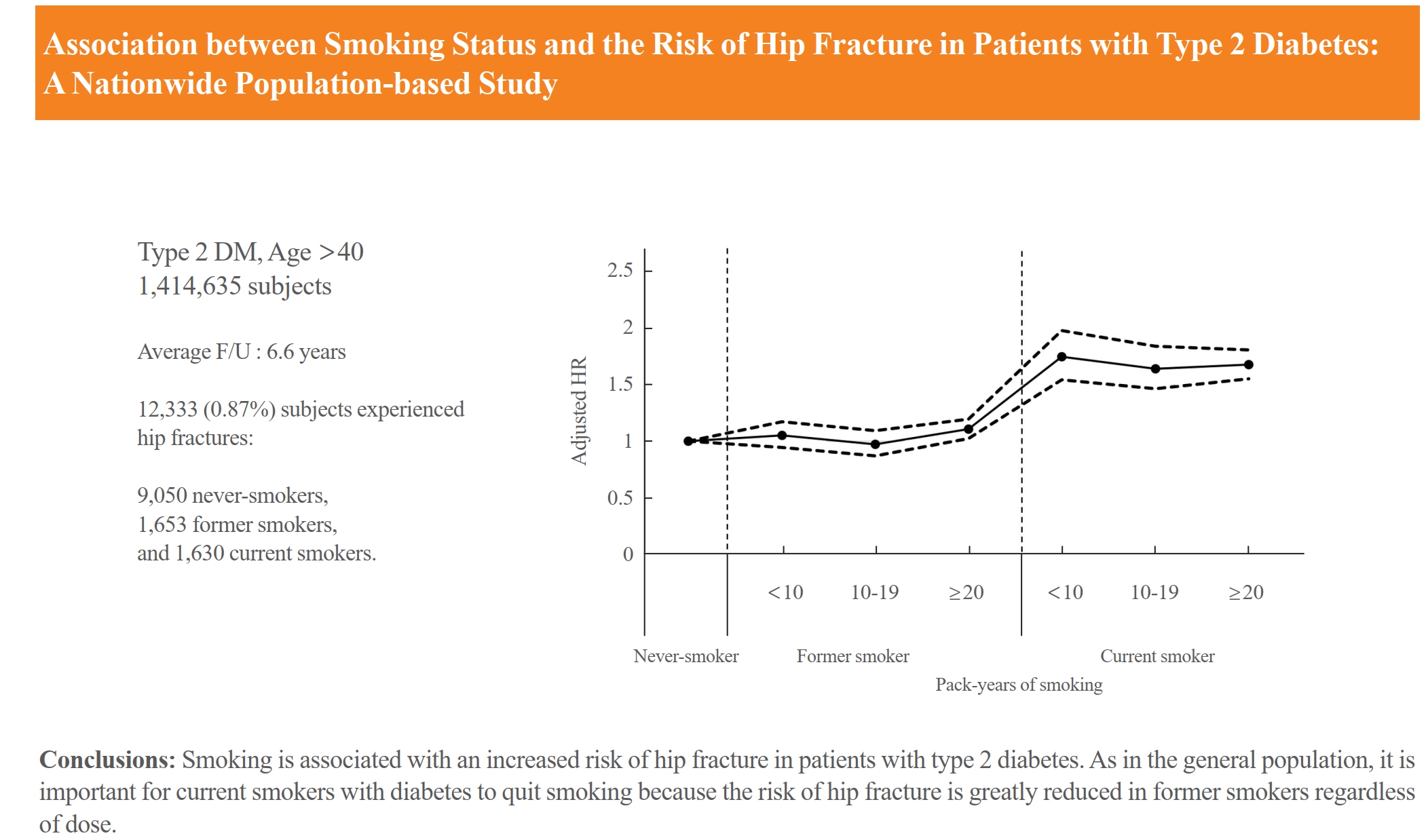
This nationwide cohort study included 1,414,635 adults aged 40 and older who received Korean National Health Insurance Service health examinations between 2009 and 2012. Subjects with type 2 diabetes were categorized according to their smoking status, amount smoked (pack-years), number of cigarettes smoked per day, and duration of smoking. The results are presented as hazard ratios (HRs) and 95% confidence intervals (CIs) for the associations between smoking status parameters and risk of hip fracture in multivariable Cox proportional hazard regression analysis.
Results
Compared with never-smokers, an increased adjusted HR (aHR) for hip fracture was observed in current smokers (1.681; 95% CI, 1.578 to 1.791), and a comparable aHR for hip fracture was found in former smokers (1.065; 95% CI, 0.999 to 1.136). For former smokers who had smoked 20 pack-years or more, the risk was slightly higher than that for never-smokers (aHR, 1.107; 95% CI, 1.024 to 1.196). The hip fracture risk of female former smokers was similar to that of female current smokers, but the hip fracture risk in male former smokers was similar to that of male never-smokers.
Conclusion
Smoking is associated with an increased risk of hip fracture in patients with type 2 diabetes. Current smokers with diabetes should be encouraged to quit smoking because the risk of hip fracture is greatly reduced in former smokers. -
Citations
Citations to this article as recorded by- Hip fractures and type 2 diabetes in the elderly: Risk factors analysis of the Nedices cohort
Federico Hawkins Carranza, Cristina Martín-Arriscado Arroba, Arturo Corbatón-Anchuelo, Guillermo Martínez Díaz-Guerra, Félix Bermejo Pareja
Diabetes & Metabolism.2025; 51(4): 101656. CrossRef - Bone Health in Type 1 and Type 2 Diabetes: Pathophysiological Mechanisms, Clinical Implications, and Management Strategies
Hermine Carine Pouabe Epse Bodah, Suraiya Rahman Shifa, Sara Saleh, Tuba Abeer Hashmi, Tuleen Al Shawa, Badreshiya Kajal Akshaykumar, Nabeel Sufwan, Rajvinder Kaur, Andrii Shevchuk, Usman Ul Haq, Manju Rai
SN Comprehensive Clinical Medicine.2025;[Epub] CrossRef - Inflammatory impact of cigarette smoking on bone function and structure; a review of evidence
Yashar Shahbaz, Rasoul Shirmohammadi, Shirin Shamsghahfarokhi, Hooman Esfahani, Mobin Forghan, Hojjat Eghbali Jelodar, Leila Ashrafi, Mohammad Mousavi
Journal of Parathyroid Disease.2025; 13: e13302. CrossRef - Influence of quitting smoking on diabetes-related complications: A scoping review with a systematic search strategy
Magdalena Walicka, Arkadiusz Krysiński, Giusy Rita Maria La Rosa, Ang Sun, Davide Campagna, Agostino Di Ciaula, Tabinda Dugal, Andre Kengne, Phuong Le Dinh, Anoop Misra, Riccardo Polosa, Syed Abbas Raza, Cristina Russo, Roberta Sammut, Noel Somasundaram
Diabetes & Metabolic Syndrome: Clinical Research & Reviews.2024; 18(5): 103044. CrossRef
- Hip fractures and type 2 diabetes in the elderly: Risk factors analysis of the Nedices cohort
- Mineral, Bone & Muscle
- Persistence with Denosumab in Male Osteoporosis Patients: A Real-World, Non-Interventional Multicenter Study
- Chaiho Jeong, Jeongmin Lee, Jinyoung Kim, Jeonghoon Ha, Kwanhoon Jo, Yejee Lim, Mee Kyoung Kim, Hyuk-Sang Kwon, Tae-Seo Sohn, Ki-Ho Song, Moo Il Kang, Ki-Hyun Baek
- Endocrinol Metab. 2023;38(2):260-268. Published online April 27, 2023
- DOI: https://doi.org/10.3803/EnM.2023.1663
- 8,849 View
- 165 Download
- 3 Web of Science
- 3 Crossref
-
Abstract
PDFSupplementary MaterialPubReader ePub
- Background
Persistence with denosumab in male patients has not been adequately investigated, although poor denosumab persistence is associated with a significant risk of rebound vertebral fractures.
Methods
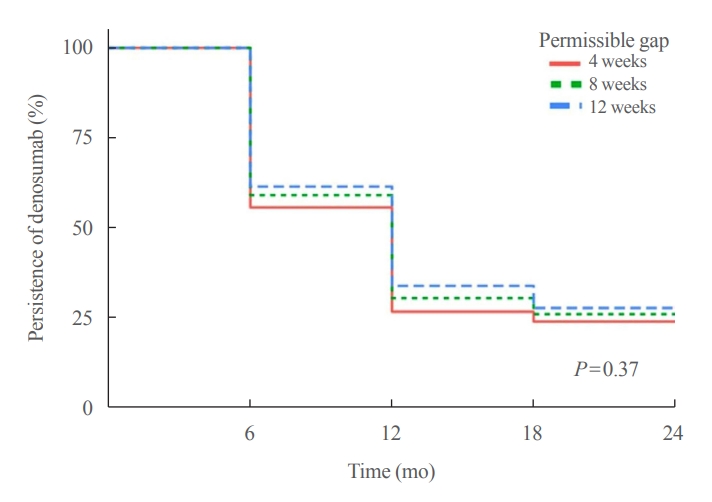
We retrospectively evaluated 294 Korean male osteoporosis patients treated with denosumab at three medical centers and examined their persistence with four doses of denosumab injection over 24 months of treatment. Persistence was defined as the extent to which a patient adhered to denosumab treatment in terms of the prescribed interval and dose, with a permissible gap of 8 weeks. For patients who missed their scheduled treatment appointment(s) during the follow-up period (i.e., no-shows), Cox proportional regression analysis was conducted to explore the factors associated with poor adherence. Several factors were considered, such as age, prior anti-osteoporotic drug use, the treatment provider’s medical specialty, the proximity to the medical center, and financial burdens of treatment.
Results
Out of 294 male patients, 77 (26.2%) completed all four sequential rounds of the denosumab treatment. Out of 217 patients who did not complete the denosumab treatment, 138 (63.6%) missed the scheduled treatment(s). Missing treatment was significantly associated with age (odds ratio [OR], 1.03), prior bisphosphonate use (OR, 0.76), and prescription by non-endocrinologists (OR, 2.24). Denosumab was stopped in 44 (20.3%) patients due to medical errors, in 24 (11.1%) patients due to a T-score improvement over –2.5, and in five (2.3%) patients due to expected dental procedures.
Conclusion
Our study showed that only one-fourth of Korean male osteoporosis patients were fully adherent to 24 months of denosumab treatment. -
Citations
Citations to this article as recorded by- Follow-on osteoporosis therapy after denosumab discontinuation among Medicare beneficiaries
Selvam R. Sendhil, Suzanne M. Cadarette, Sulbh Aggarwal, Arman Oganisian, Andrew R. Zullo, Sarah D. Berry, Michael A. Adegboye, Kaleen N. Hayes
Osteoporosis International.2026; 37(1): 81. CrossRef - Denosumab safety in men with osteoporosis: a disproportionality analysis of the FAERS database
Hou-hong Li, Li Wan, Si-jie He, Wen-long Xie
Naunyn-Schmiedeberg's Archives of Pharmacology.2026; 399(11): 16915. CrossRef - Denosumab
Reactions Weekly.2023; 1963(1): 206. CrossRef
- Follow-on osteoporosis therapy after denosumab discontinuation among Medicare beneficiaries
- Thyroid
Big Data Articles (National Health Insurance Service Database) - Repeated Low High-Density Lipoprotein Cholesterol and the Risk of Thyroid Cancer: A Nationwide Population- Based Study in Korea
- Jinyoung Kim, Mee Kyoung Kim, Ki-Hyun Baek, Ki-Ho Song, Kyungdo Han, Hyuk-Sang Kwon
- Endocrinol Metab. 2022;37(2):303-311. Published online April 6, 2022
- DOI: https://doi.org/10.3803/EnM.2021.1332
- 12,360 View
- 191 Download
- 22 Web of Science
- 24 Crossref
-
Abstract
PDFSupplementary MaterialPubReader ePub
- Background
High-density lipoprotein cholesterol (HDL-C) plays an important role in the reverse cholesterol transport pathway and prevents atherosclerosis-mediated disease. It has also been suggested that HDL-C may be a protective factor against cancer. However, an inverse correlation between HDL-C and cancer has not been established, and few studies have explored thyroid cancer.
Methods
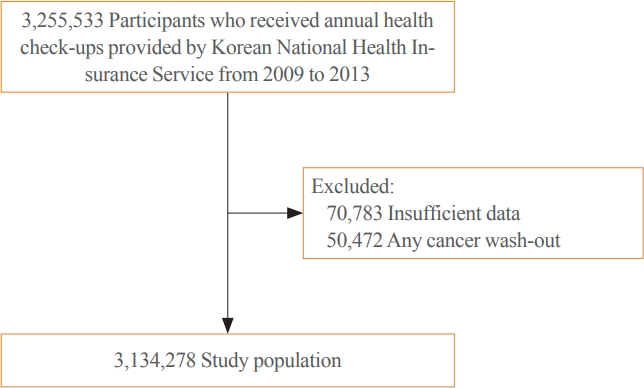
The study participants received health checkups provided by the Korean National Health Insurance Service from 2009 to 2013 and were followed until 2019. Considering the variability of serum HDL-C level, low HDL-C level was analyzed by grouping based on four consecutive health checkups. The data analysis was performed using univariate and multivariate Cox proportional hazard regression models.
Results
A total of 3,134,278 total study participants, thyroid cancer occurred in 16,129. In the crude model, the hazard ratios for the association between repeatedly measured low HDL-C levels and thyroid cancer were 1.243, 1.404, 1.486, and 1.680 (P for trend <0.01), respectively, which were significant even after adjusting for age, sex, lifestyle factors, and metabolic diseases. The subgroup analysis revealed that low HDL-C levels likely had a greater impact on the group of patients with central obesity (P for interaction= 0.062), high blood pressure (P for interaction=0.057), impaired fasting glucose (P for interaction=0.051), and hyperlipidemia (P for interaction=0.126).
Conclusion
Repeatedly measured low HDL-C levels can be considered a risk factor for cancer as well as vascular disease. Low HDL-C levels were associated with the risk of thyroid cancer, and this correlation was stronger in a metabolically unhealthy population. -
Citations
Citations to this article as recorded by- Development and validation of a nomogram prediction model for thyroid dysfunction in patients with type 2 diabetes mellitus
Yinghao Niu, Zhihua Chen, Yating Li, Li Liu, Xuan Wang, Jun Wang, Dan Song
Scientific Reports.2026;[Epub] CrossRef - Research Progress of Hyperthyroidism Complicated with Thyroid Cancer
扬 李
Advances in Clinical Medicine.2026; 16(06): 1917. CrossRef - Prognostic value of the Controlling Nutritional Status (CONUT) score in cancer: an umbrella review of systematic reviews and meta-analyses
Xiaohua Wang, Jiyu Yang, Yingze Hou, Tong Wu, Xinru Wang, Xiaoyu Zhang, Xianchun Zhou
Frontiers in Nutrition.2026;[Epub] CrossRef - Cholesterol in hematological malignancies: metabolism, mechanisms, and clinical implications
Yaqin Zhang, Mengbo Yang, Siyuan Yan, Ruiyang Li, Yuanjun Zheng, Donglei Zhang, Hongyuan Shang, Fang Wei
Frontiers in Immunology.2026;[Epub] CrossRef - Statin Use and Site-Specific Cancer Risk: A Nationwide Cohort Study Using Korean Health Insurance Data
Jihoon Seo, Jung Yoon Moon, Ye-Jee Kim, Hwa Jung Kim, Chang Hee Jung, Woo Je Lee, Yun Kyung Cho
Journal of Lipid and Atherosclerosis.2026; 15(3): 498. CrossRef - The Interplay Between Thyroid Cancer and Cardiovascular Disease: Shared Mechanisms, Treatment Implications, and Survivorship Perspectives
Leila Najd-Hassan-Bonab, Maryam Moazzam-Jazi, Raziyeh Abooshahab, Shabnam heydarzadeh, Maryam S. Daneshpour, Mehdi Hedayati
Cardiovascular Toxicology.2026;[Epub] CrossRef - Lipid Metabolic Reprogramming in Thyroid Cancer: Systemic Biomarkers, Tumor Dependencies and Therapeutic Resistance
Li Zhou, Yiqing Mi, Linlin Mao, Jingjing Shi, Yu Zhang, Gang Pan, You Peng
Metabolites.2026; 16(10): 736. CrossRef - Ocular motor cranial neuropathy and risk of thyroid cancer: A Korean population-based study
Jaeryung Kim, Kyung-Ah Park, Kyungdo Han, Jin-Hyung Jung, Sei Yeul Oh, Soolienah Rhiu, Xing Xiong,
PLOS ONE.2025; 20(3): e0319872. CrossRef - Association between serum lipid and papillary thyroid cancer: a retrospective study in China
Zike Zhang, Xingyu Lan, Long You, Dongsheng Han, Hui Tang, Ying Zhao, Xiao Hu
PeerJ.2025; 13: e19644. CrossRef - Association between total cholesterol levels and all-cause mortality among newly diagnosed patients with cancer
Seohyun Kim, Gyuri Kim, So Hyun Cho, Rosa Oh, Ji Yoon Kim, You-Bin Lee, Sang-Man Jin, Kyu Yeon Hur, Jae Hyeon Kim
Scientific Reports.2024;[Epub] CrossRef - Association between organophosphate flame retardant exposure and lipid metabolism: data from the 2013–2014 National Health and Nutrition Examination Survey
Fu-Jen Cheng, Kai-Fan Tsai, Kuo-Chen Huang, Chia-Te Kung, Wan-Ting Huang, Huey-Ling You, Shau-Hsuan Li, Chin-Chou Wang, Wen-Chin Lee, Hsiu-Yung Pan
Frontiers in Public Health.2024;[Epub] CrossRef - Low serum total cholesterol levels predict inferior prognosis of patients with POEMS syndrome
Jue Zhang, Ting Zhang, Ye Yao, Xuxing Shen, Yuanyuan Jin, Run Zhang, Lijuan Chen
Discover Oncology.2024;[Epub] CrossRef - Lipoprotein alterations in endocrine disorders - a review of the recent developments in the field
Michal Olejarz, Ewelina Szczepanek-Parulska, Marek Ruchala
Frontiers in Endocrinology.2024;[Epub] CrossRef - Associations Between Metabolic Obesity Phenotypes and Pathological Characteristics of Papillary Thyroid Carcinoma
Xiuyun Li, Xiujuan Zhang, Li Sun, Lulu Yang, Qihang Li, Zhixiang Wang, Yafei Wu, Ling Gao, Jiajun Zhao, Qingling Guo, Meng Zhou
Endocrine Practice.2024; 30(7): 624. CrossRef - Analysis of risk factors for papillary thyroid carcinoma and the association with thyroid function indicators
Jianning Liu, Zhuoying Feng, Ru Gao, Peng Liu, Fangang Meng, Lijun Fan, Lixiang Liu, Yang Du
Frontiers in Endocrinology.2024;[Epub] CrossRef - Carbohydrate, Lipid, and Apolipoprotein Biomarkers in Blood and Risk of Thyroid Cancer: Findings from the AMORIS Cohort
Xue Xiao, Yi Huang, Fetemeh Sadeghi, Maria Feychting, Niklas Hammar, Fang Fang, Zhe Zhang, Qianwei Liu
Cancers.2023; 15(2): 520. CrossRef - Altered serum lipid levels are associated with prognosis of diffuse large B cell lymphoma and influenced by utility of rituximab
Fei Wang, Luo Lu, HuiJuan Chen, Yanhua Yue, Yanting Sun, Feng Yan, Bai He, Rongrong Lin, Weiying Gu
Annals of Hematology.2023; 102(2): 393. CrossRef - Big Data Research in the Field of Endocrine Diseases Using the Korean National Health Information Database
Sun Wook Cho, Jung Hee Kim, Han Seok Choi, Hwa Young Ahn, Mee Kyoung Kim, Eun Jung Rhee
Endocrinology and Metabolism.2023; 38(1): 10. CrossRef - High-density lipoprotein cholesterol and carcinogenesis
Meijuan Tan, Shijie Yang, Xiequn Xu
Trends in Endocrinology & Metabolism.2023; 34(5): 303. CrossRef - Low Serum Cholesterol Level Is a Significant Prognostic Factor That Improves CLL-IPI in Chronic Lymphocytic Leukaemia
Rui Gao, Kaixin Du, Jinhua Liang, Yi Xia, Jiazhu Wu, Yue Li, Bihui Pan, Li Wang, Jianyong Li, Wei Xu
International Journal of Molecular Sciences.2023; 24(8): 7396. CrossRef - Do metabolic factors increase the risk of thyroid cancer? a Mendelian randomization study
Weiwei Liang, FangFang Sun
Frontiers in Endocrinology.2023;[Epub] CrossRef - Assessment of causal association between differentiated thyroid cancer and disordered serum lipid profile: a Mendelian randomization study
Qiang Ma, Yu Li, Lijuan An, Liang Guo, Xiaokang Liu
Frontiers in Endocrinology.2023;[Epub] CrossRef - Risk factors and diagnostic prediction models for papillary thyroid carcinoma
Xiaowen Zhang, Yuyang Ze, Jianfeng Sang, Xianbiao Shi, Yan Bi, Shanmei Shen, Xinlin Zhang, Dalong Zhu
Frontiers in Endocrinology.2022;[Epub] CrossRef - Exposure to multiple trace elements and thyroid cancer risk in Chinese adults: A case-control study
Jia-liu He, Hua-bing Wu, Wen-lei Hu, Jian-jun Liu, Qian Zhang, Wei Xiao, Ming-jun Hu, Ming Wu, Fen Huang
International Journal of Hygiene and Environmental Health.2022; 246: 114049. CrossRef
- Development and validation of a nomogram prediction model for thyroid dysfunction in patients with type 2 diabetes mellitus
 First
 Prev




